
Published:
2014-01-30
Updated:
2024-05-22
Learning Ukulele with Curt
A Guide to Blues Chord Progression for Ukulele A to Z - C Tuning
The Blues are at the heart of all American music. It has influenced Country, Rock, Folk, Jazz, Bluegrass and just about every form of American music we listen to today. 26 blues progression in C and G tuning, progressing from basic to advanced jazz progression, with chord grids and substitutions explained.
Author(s): Curt Sheller Publisher: Curt Sheller Publications Code: AGCPB1UKE-C
Main Category: Chords Main Instrument: Any

24 June 2026

If you're a registered site member and have the correct permissions you can view ALL the pages of this PDF or Samples pages at a larger size using the LearningUkulele.com Online PDF Viewer.
This Download is NOT part of your LearningUkulele.com and Learning Ukulele with Curt membership level.
Sign-up for Premium Site Access or Upgrade Your Plan to download this PDF or your can purchase a copy for download
Register/Sign In for Access…After purchasing a PDF a download link or PDF link will be sent to you.
Contact LearningUkulele.com and Learning Ukulele with Curt if there are any issues.
However, if you'd like to support the site even more ❤️ you can buy the PDF.
Product Info
- Product Code: AGCPB1UKE-C
- Author(s): Curt Sheller
- Publisher(s): Curt Sheller Publications
- Published: 30 January 2014
- Updated: 22 May 2024
- ISBN-13: 978-1-60321-193-2
- Size*: Book: ANSI A (8.5 x 11 in), PDF A4 (210 x 297 mm)
- Pages: 78
- Hard Copy Price: $17.95
- PDF Price: $9.00
Regarding Book, Lesson and Charts Paper Sizes
• click to Hide more info
• click to Show more info
Starting 2020 LearningUkulele.com and Learning Ukulele with Curt moved to A4 paper sizes for all new books and new editions of books, lessons, and charts.
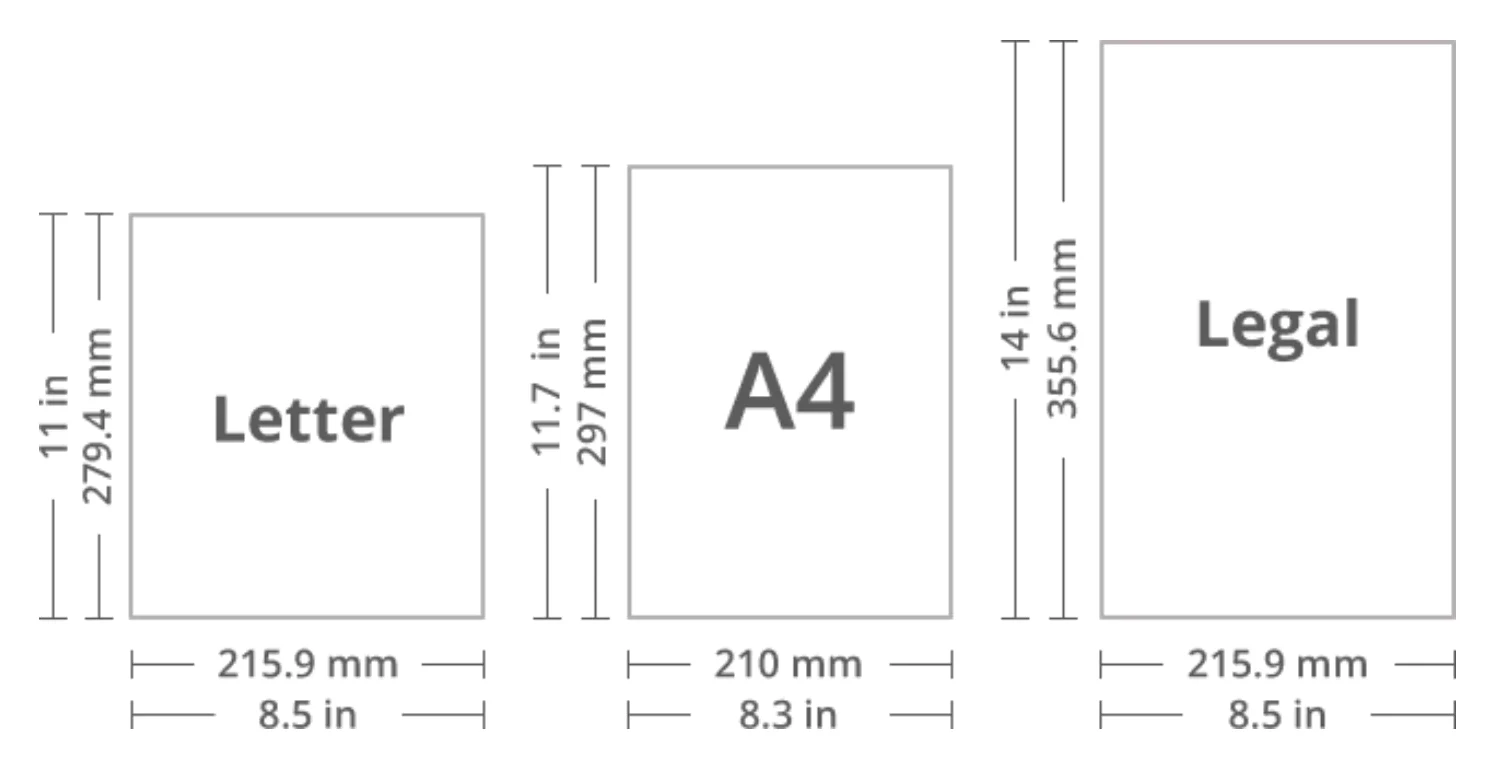
The A Series was adopted in Europe in the 19th century, and is currently used all around the world, apart from in the USA and Canada.
• Decoding Printer Paper Sizes: A4 vs Letter vs Legal. which is Standard?
NOTE: Printing A4 to US Letter Size: As the sizes are relatively close, simple select Scale to Fit
and the A4 size will print out fine.
The Blues are at the heart of all American music. It has influenced Country, Rock, Folk, Jazz, Bluegrass and just about every form of American music we listen to today. 26 blues progression in C and G tuning, progressing from basic to advanced jazz progression, with chord grids and substitutions explained.
NEW 2nd Edition, C Tuning
New & Updated 2nd Edition for C Tuning – High or Low D. • A Guide to Blues Chord Progressions for Ukulele A to Z – C Tuning, 2nd Edition • Minor tweaks and new format for the Example chord progressions. All examples are in the Key of C Major with a few a couple of basic blues in the Key of Cm.
Studying the blues chord progressions presented in this book will open a wealth of creative possibilities for exploring chord progressions in all styles of music, not just blues.
This volume covers the keys of C Major and C Minor . Each example includes detailed accompanying text explaining the principles behind each progression and its chord substitutions.
More A Guide to Blues Chord Progression for Ukulele A to Z - C Tuning
content below, continue exploring...
More info: A Guide to Blues Chord Progression for Ukulele A to Z - C Tuning
A Guide to Blues Chord Progressions for Ukulele A to Z starts with a basic three chord, 12 bar blues and progresses through 26 blues progression in C tuning up to a sophisticated jazz blues with multiple chord substitutions.
All examples are shown in C tuning. Suitable for Soprano, Concert, Tenor, and Baritone ukuleles in — C Tuning. Get through this book and you'll have a solid jazz chord foundation to build on.
C Tuning Low or high string four variations.
- Contents
- Introduction 5
- Chord Substitution Principles
- Passive Chords
- Active Chords
- Direct Substitution
- Replacement
- Expansion
- Superimposable
- Non-superimposable
- Note Substitution
- The Minor Third Substitution Principle
- bVII7
- bII7
- III7
- Blues Progressions
- Basic “Major” I IV V Progression - Example A
- Basic “Major” I IV V Progression - Example B
- Major “Quick Four” Progression - Example D
- Minor “Quick Four” Progression - Example E
- Linking Substitution - Example G
- Linking Substitution - Example H
- Linking Substitution - Example I
- Diminished Seventh Passing Chord - Example J
- Measure Seven and Eight Linking - Example K
- Diatonic Linking Substitution - Example L
- Chromatic Linking Substitution - Example M
- Mixed Chromatic and Diatonic Substitution - Example N
- “Backdoor” Substitution - Example O
- Confirmation Changes - Example P
- Lewis Changes - Example Q
- Coltrane Blues - Example R
- The Tri-Tone Substitution - Example S
- The Tri-Tone Substitution - Example T
- The Tri-tone II V Substitution - Example U
- The Tri-tone II V Substitution - Example V
- The Tri-tone II V Substitution - Example W
- The Tri-tone II V Substitution - Example X
- The Tri-tone II V Substitution - Example Y
- The Tri-tone II V Substitution - Example Z
- Rhythm Changes
- Rhythm Changes - Basic
- Rhythm Changes - Jazz Variation
- How to Practice Chord Progressions
- Conclusion

QuickStart Progressions Blues Track 1 - Shuffle, Play-along Track
Explore creating solo, leads, and improvisation with this Blues play-along track in the common "Key of A." Great for exploring the Blues scale fingerings from the "QuickStart Scale and Arpeggio Series" of books. A standard I IV V 12 bar blues progression in the key of A using A7, D7, and E7 chords.
Related Lessons
Related Lessons for A Guide to Blues Chord Progression for Ukulele A to Z - C Tuning


































Chord a Day, January 11th - D7
Learn a new Ukulele chord every day of the year. The chord for January 11th is D7. This partial D7 is ofter referred to as the Hawaiian D7 chord after its use in the Chord sequence C D7 G7, a common turnaround in Hawaiian music. So much so that it's called the Hawaiian Turnaround.






















































Chord a Day, March 3rd - F7
Learn a new Ukulele chord every day of the year. The chord for March 3rd is F7. We are now entering into the so-called “Jazz” chord, world of chords. Technically “Jazz” chords are simply 4-part contemporary chords that find the use in a wide variety of traditional and contemporary music.






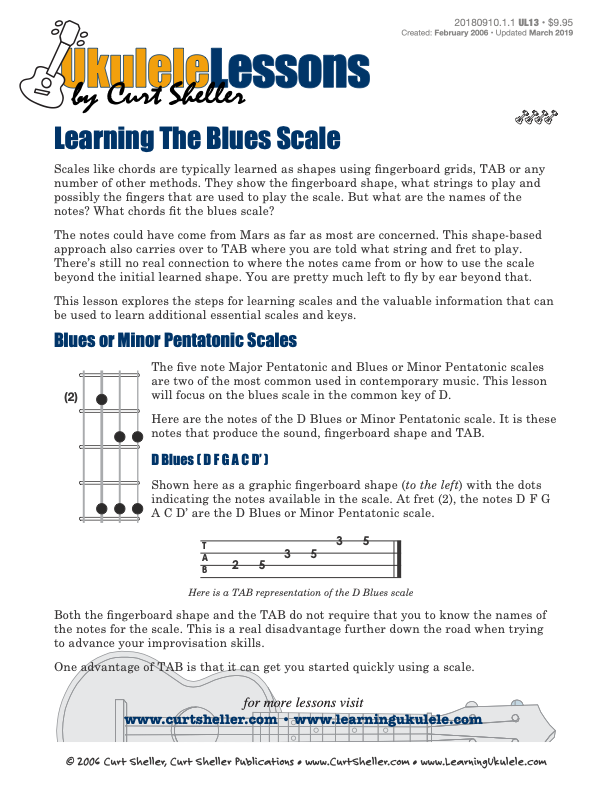
Learning The Blues Scale on `Ukulele
Learn the Blues ( Minor Pentatonic ) and Pentatonic ( Major Pentatonic ) scales on ukulele. A practical approach to learning theses two essential scales using the Blues. These five note scales, the Major Pentatonic and the Blues or Minor Pentatonic scales are two of the most common scales used in contemporary music.


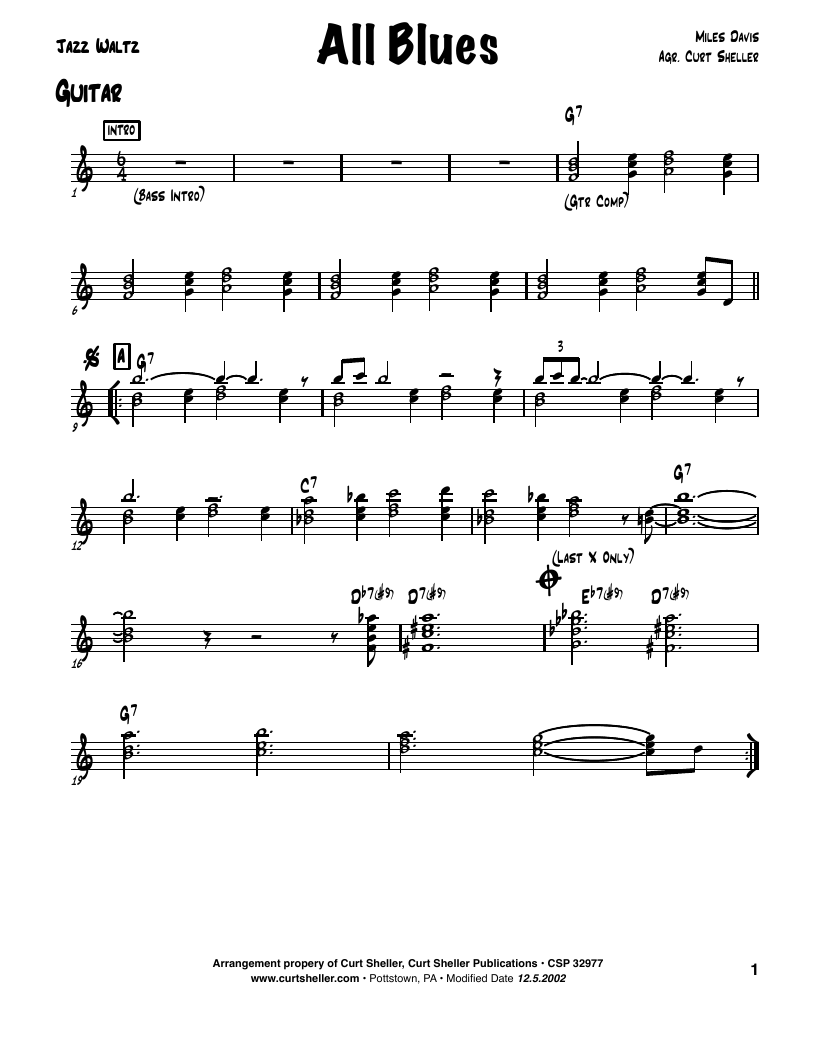
All Blues
All Blues is a jazz composition by Miles Davis first appearing on the influential 1959 album Kind of Blue. It is a twelve-bar blues in; the chord sequence is that of a basic blues and made up entirely of seventh chords, with a VI in the turnaround instead of just the usual V chord. In the song's original key of G this chord is an E7. "All Blues" is a modal blues in G mixolydian.
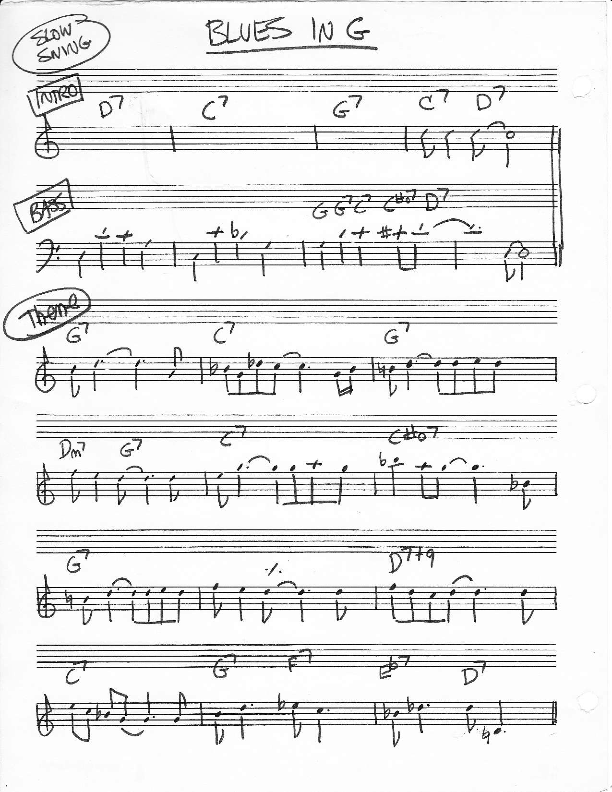

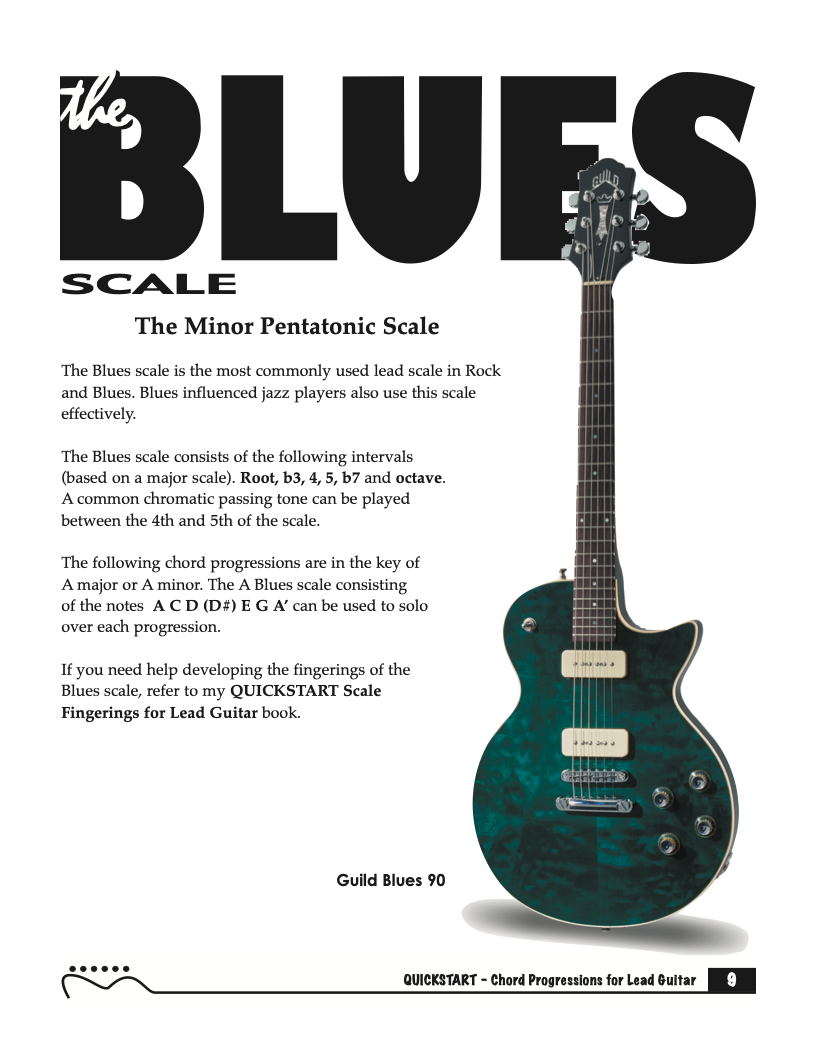
QuickStart Blues Playalong Tracks
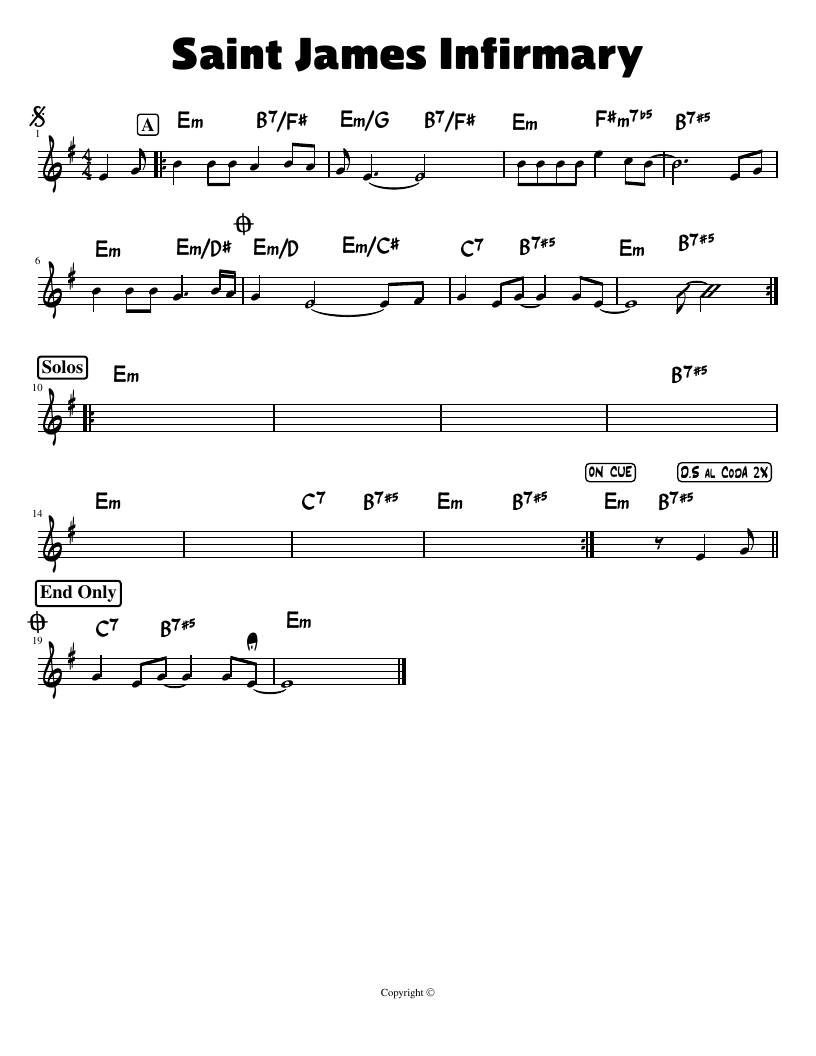
St. James Infirmary Blues
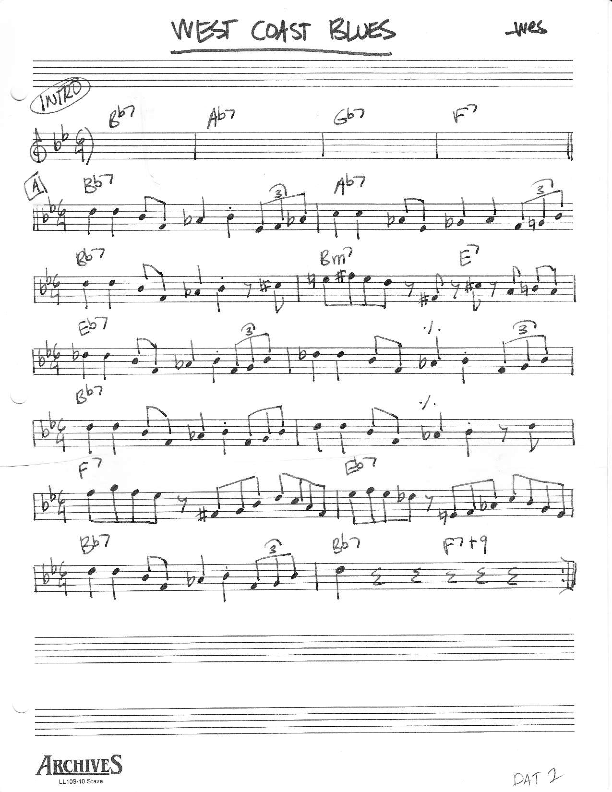
West Coast Blues
A jazz classic by the late jazz guitarist Wes Montgomery. Wes is widely considered one of the major jazz guitarists, emerging after such seminal figures as Django Reinhardt and Charlie Christian and influencing countless others, including George Benson, Kenny Burrell, Grant Green, Jimi Hendrix, Steve Howe, Russell Malone, Pat Martino, Pat Metheny, Randy Napoleon, and Emily Remler.