
Published:
2019-07-10
Updated:
2024-11-14
Learning Ukulele with Curt
Fingerpicking for Ukulele - Alternating Thumb Style, 2nd Edition
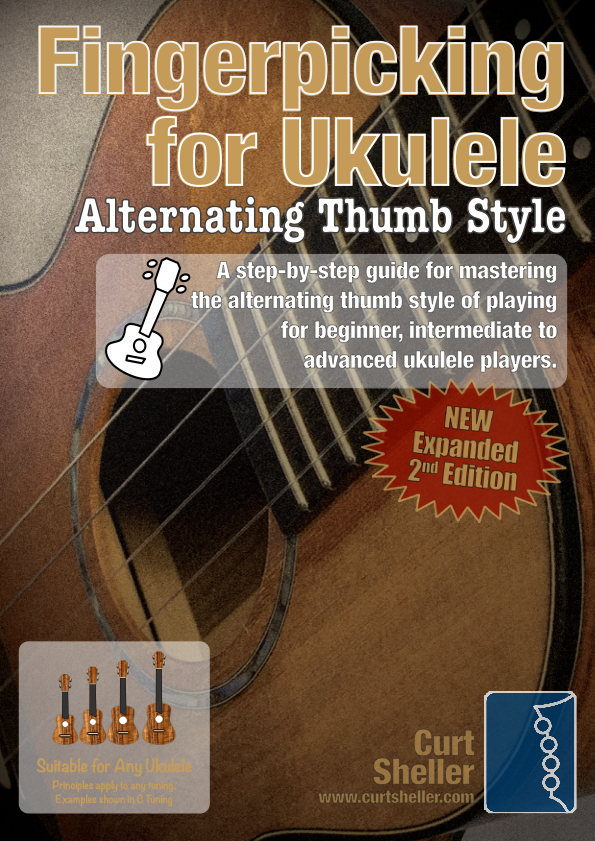
Fingerpicking for Ukulele - Alternating Thumb Style, 2nd Edition is an new expanded edition which focuses on the alternating thumb fingerpicking style through a series of graduated lessons-chapters incorporating your index and middle fingers with the alternating thumb.
Author(s): Curt Sheller Publisher: Code: UKEFP01v2
Main Category: Fingerpicking Main Instrument: Ukulele

24 June 2026
If you're a registered site member and have the correct permissions you can view ALL the pages of this PDF or Samples pages at a larger size using the LearningUkulele.com Online PDF Viewer.
This Download is NOT part of your LearningUkulele.com and Learning Ukulele with Curt membership level.
Sign-up for Premium Site Access or Upgrade Your Plan to download this PDF or your can purchase a copy for download
Register/Sign In for Access…After purchasing a PDF a download link or PDF link will be sent to you.
Contact LearningUkulele.com and Learning Ukulele with Curt if there are any issues.
However, if you'd like to support the site even more ❤️ you can buy the PDF.
Product Info
- Product Code: UKEFP01v2
- Author(s): Curt Sheller
- Publisher(s):
- Published: 10 July 2019
- Updated: 14 November 2024
- ISBN-13: 978-1-60321-091-1
- Size*: Book ANSI A (8.5 x 11 in), PDF A4 (210 x 297 mm)
- Pages: 104
- Hard Copy Price: $19.95
- PDF Price: $9.00
Regarding Book, Lesson and Charts Paper Sizes
• click to Hide more info
• click to Show more info
Starting 2020 LearningUkulele.com and Learning Ukulele with Curt moved to A4 paper sizes for all new books and new editions of books, lessons, and charts.
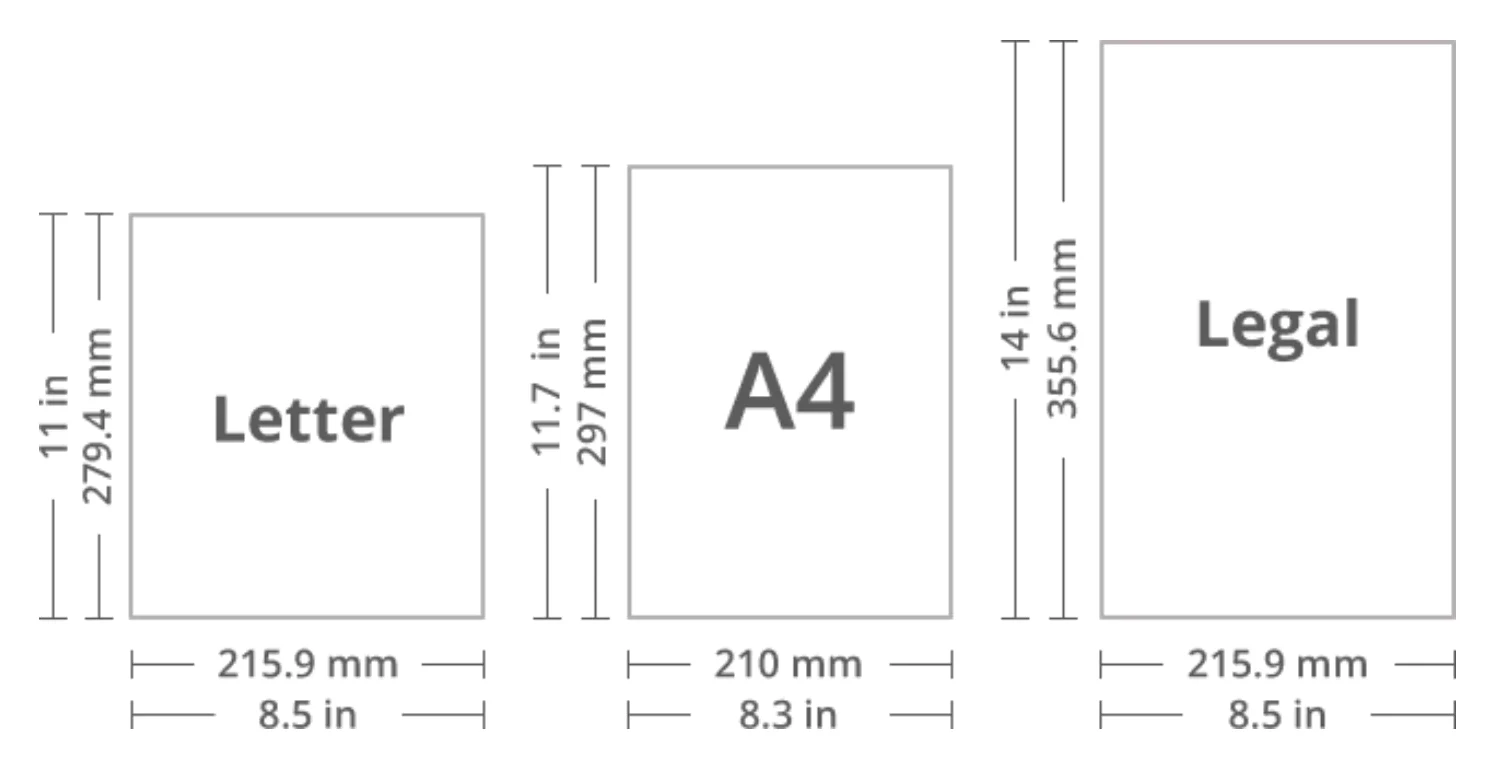
The A Series was adopted in Europe in the 19th century, and is currently used all around the world, apart from in the USA and Canada.
• Decoding Printer Paper Sizes: A4 vs Letter vs Legal. which is Standard?
NOTE: Printing A4 to US Letter Size: As the sizes are relatively close, simple select Scale to Fit
and the A4 size will print out fine.
Fingerpicking for Ukulele - Alternating Thumb Style, 2nd Edition is an new expanded edition which focuses on the alternating thumb fingerpicking style through a series of graduated lessons-chapters incorporating your index and middle fingers with the alternating thumb.
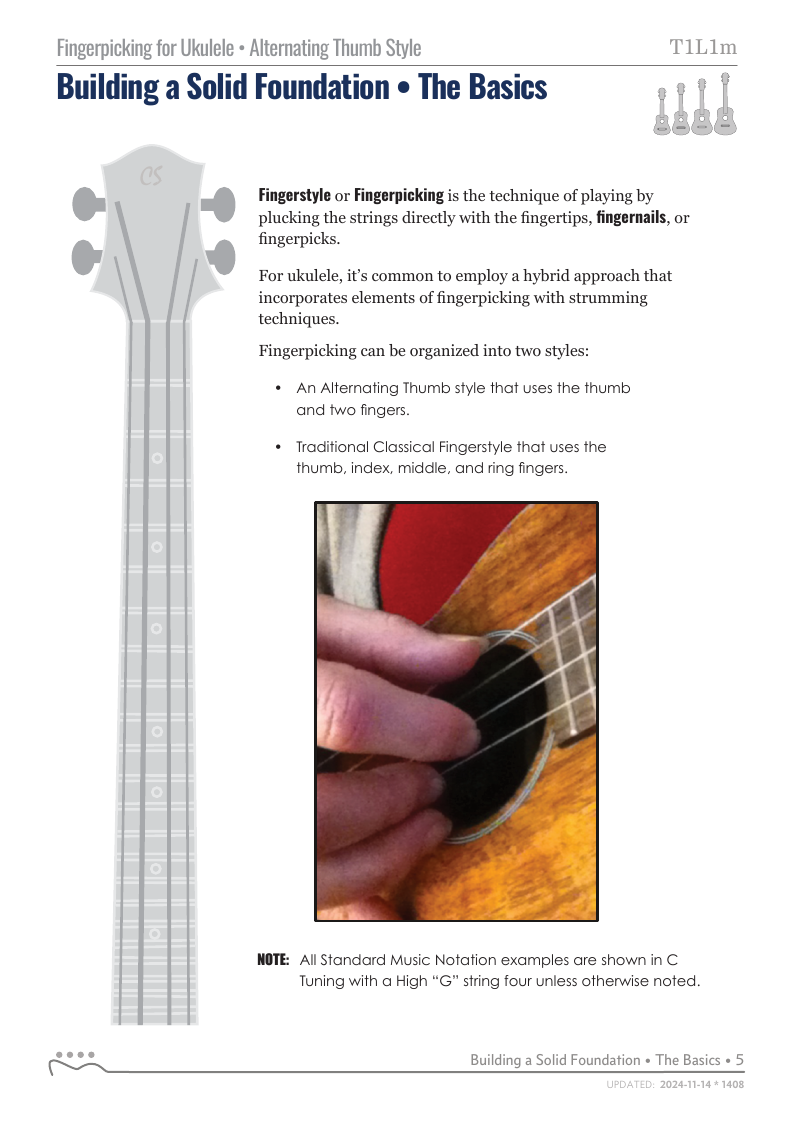
For ukulele, it's common to employ a hybrid approach that incorporates elements of fingerpicking with strumming techniques. Fingerpicking can be organized into two styles: An alternating thumb style that uses the thumb and two fingers. And, the Traditional classical fingerstyle that uses the thumb, index, middle, and ring fingers. Fingerpicking for Ukulele - Alternating Thumb Style focuses on the alternating thumb fingerpicking style through a series of graduated lessons-chapters incorporating your index and middle fingers with the alternating thumb.
Fingerpicking for Ukulele - Alternating Thumb Style focuses on the alternating thumb fingerpicking style through a series of graduated lessons-chapters incorporating your index and middle fingers with the alternating thumb.
For ukulele, it's common to employ a hybrid approach that incorporates elements of fingerpicking with strumming techniques. Fingerpicking can be organized into two styles: An alternating thumb style that uses the thumb and two fingers. And, the Traditional classical fingerstyle that uses the thumb, index, middle, and ring fingers. Fingerpicking for Ukulele - Alternating Thumb Style focuses on the alternating thumb fingerpicking style through a series of graduated lessons-chapters incorporating your index and middle fingers with the alternating thumb.
- Chapter 1 – Building the Foundation • The Basics
- Chapter 2 – Thumb and One Finger • Level 1
- Chapter 3 – Thumb and One Finger • Level 2
- Chapter 4 – Thumb and One Finger • Level 3
- Chapter 5 – Thumb and One Finger • Level 4
- Chapter 6 – Thumb and One Finger • The Middle Finger
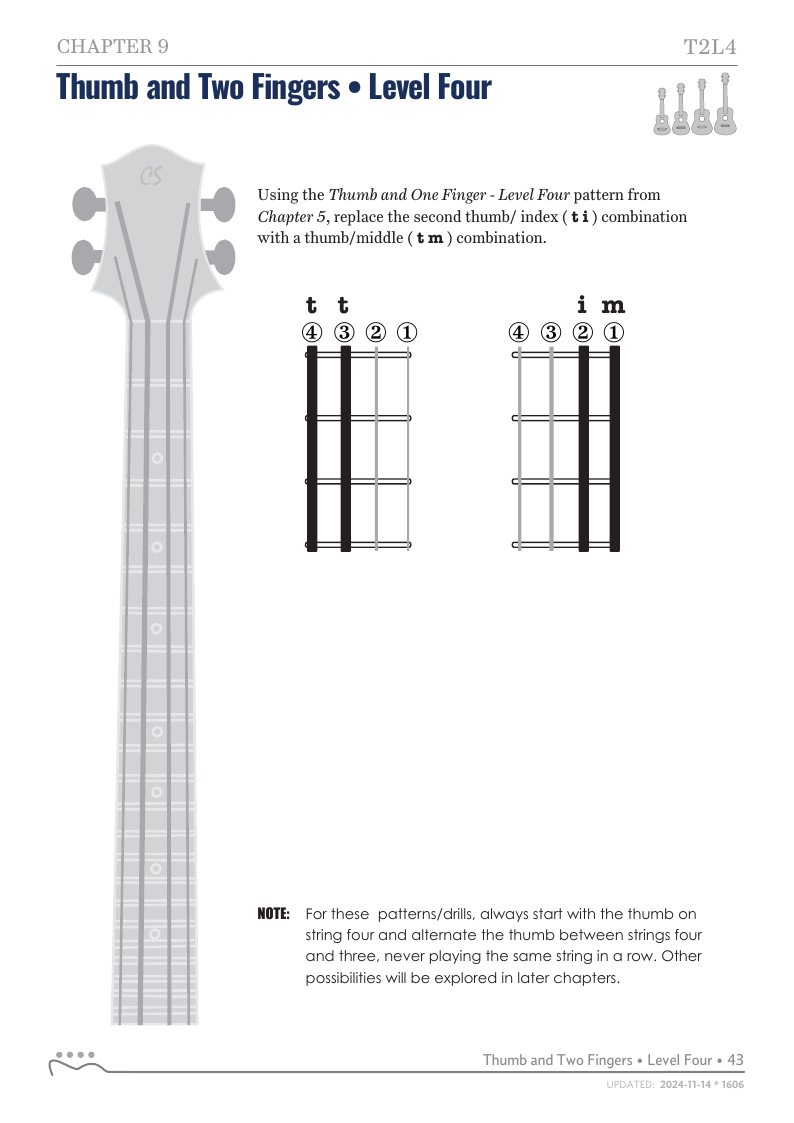
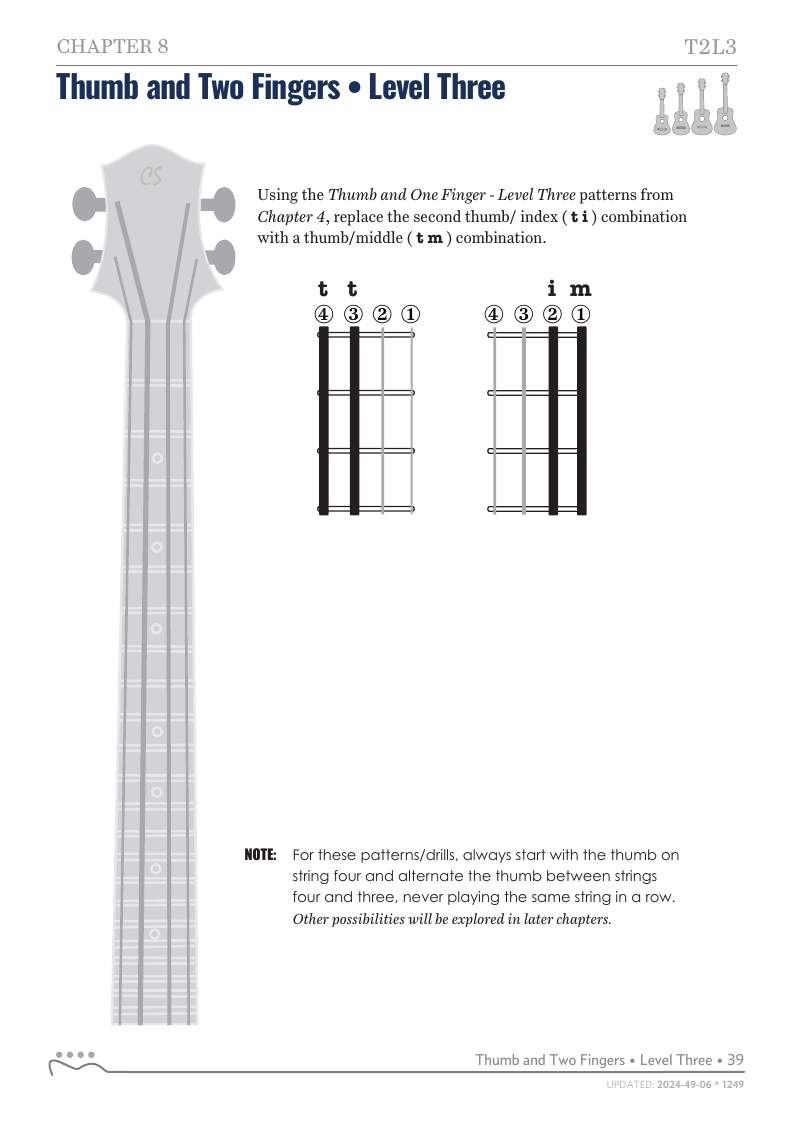
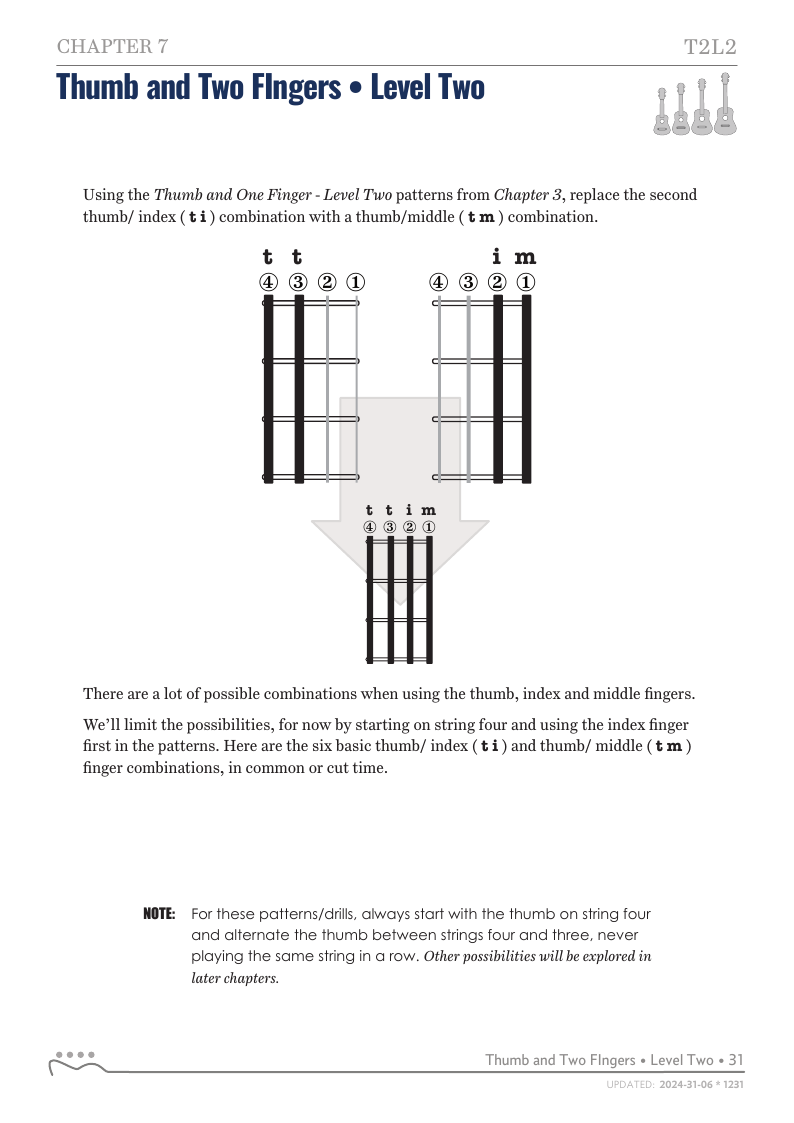
- Chapter 7 – Thumb and Two Fingers • Level 2
- Chapter 8 – Thumb and Two Fingers • Level 3
- Chapter 9 – Thumb and Two Fingers • Level 4
- Chapter 10 – The Pinch
- Chapter 11 – Rhythmic Variations
- Chapter 12 – More Rhythmic Variations
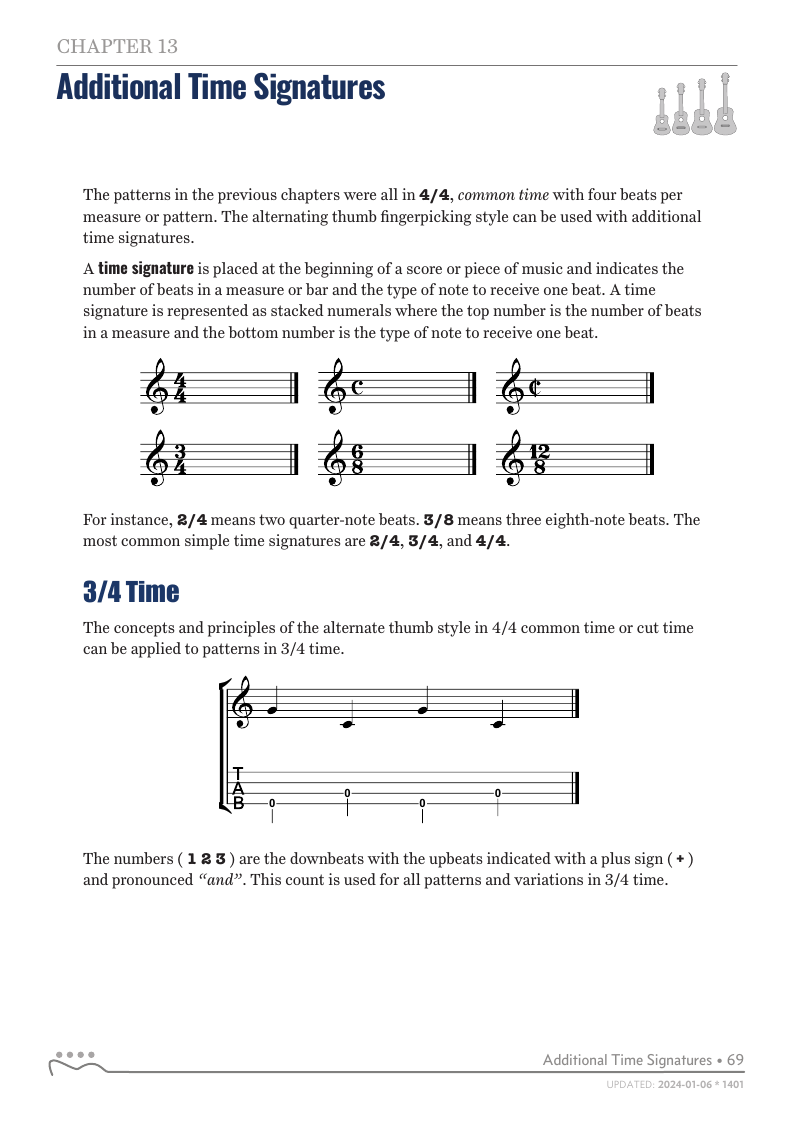
- Chapter 13 – Additional Time Signatures
- Chapter 14 – Banjo Rolls on Ukulele
- Chapter 15 – Embellishments
- Chapter 16 – How to Read TAB
- Chapter 17 – Extras
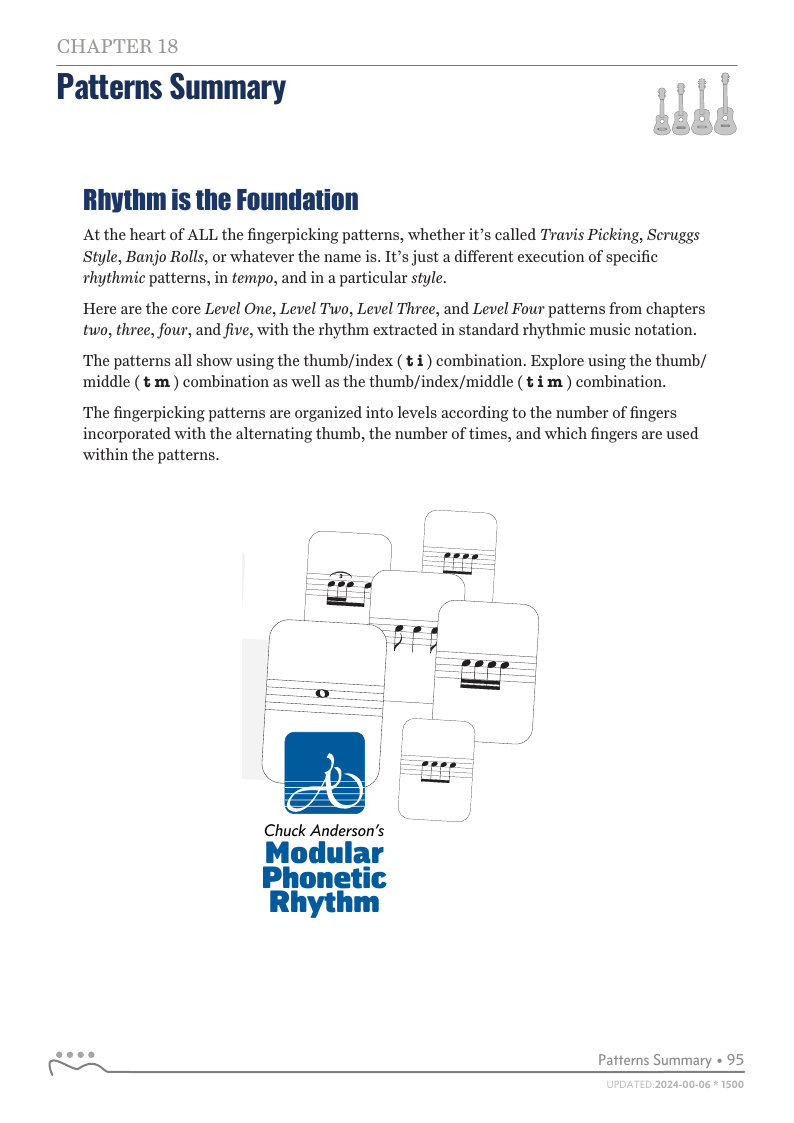
- Chapter 18 – Patterns Summary
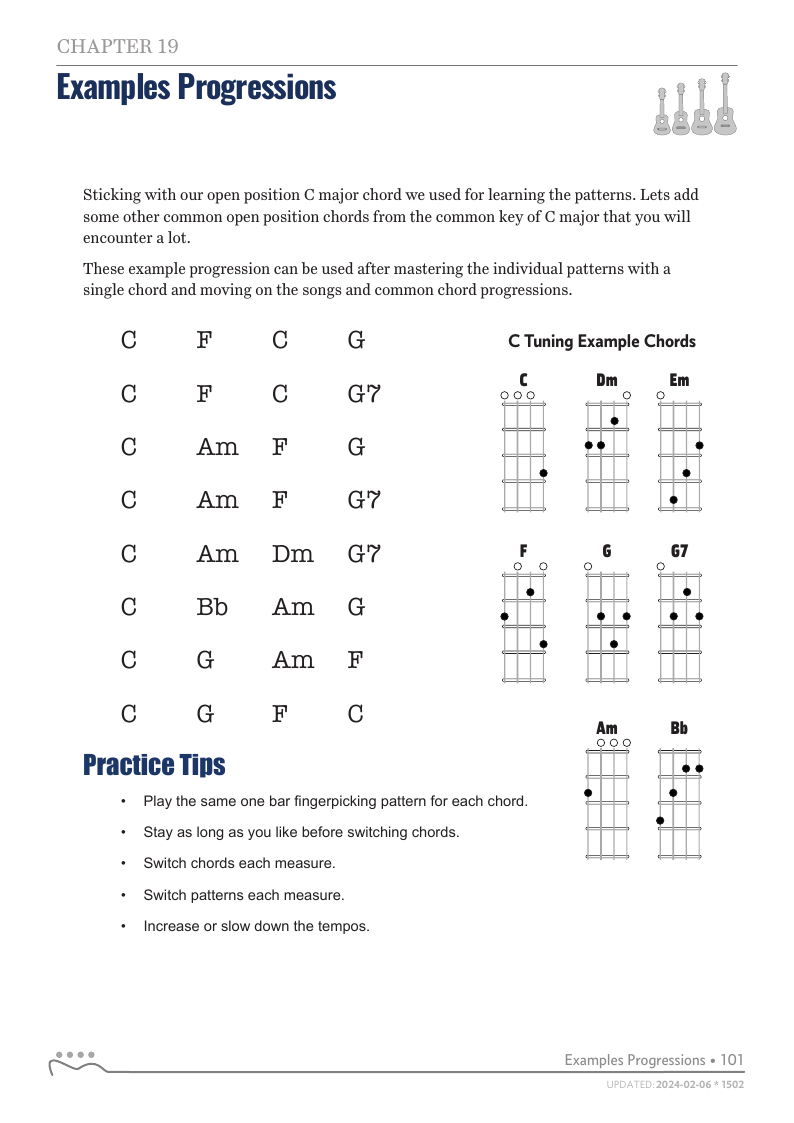
- Chapter 19 – Example Progressions
- Chapter 20 – Conclusion
- 14 November 2024 Updated Chapter 3 with missing T1L2 patterns and missing Standard Music Notation & TAB patterns.
- 23 January 2024 (Jan 23, 2024, 4:22:06PM GMT) – New updated version with missing pattern for T1L3 and T3L3 patterns and a few more tweaks.
- 5 April 2022 – Errata File Created
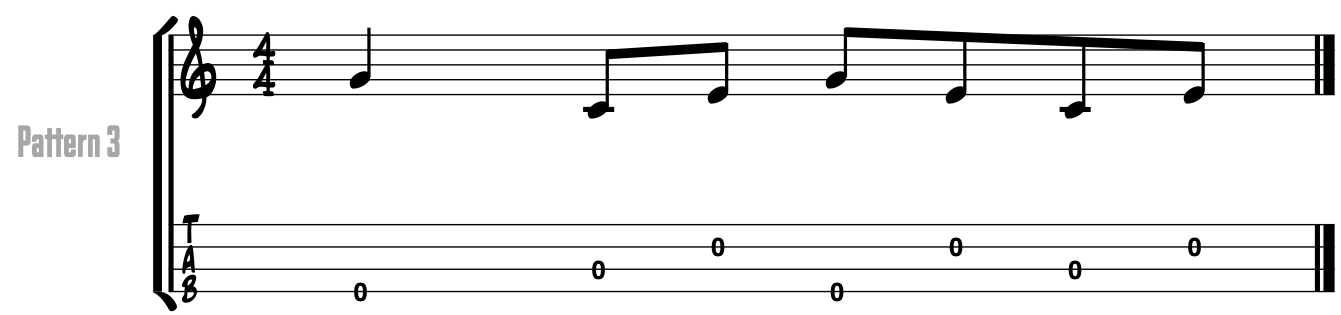
- 5 April 2022 – page 26, Pattern 1 should be Pattern 3.
Related Lessons
Related Lessons for Fingerpicking for Ukulele - Alternating Thumb Style, 2nd Edition


Alternating Thumb Style, Building a Solid Foundation - The Basics
As the subtitle of this Fingerpicking Basics lesson for Ukulele implies, this lesson's focus is on the alternating thumb part of the style. Commonly called Travis Picking on guitar and Scrugg's Style for banjo. For guitar it’s an alternating bass note style with the thumb playing the lower, bass notes.
Alternating Thumb Style, Conclusion
Fingerpicking for Ukulele – Alternating Thumb Style explored a lot of material. This style of fingerpicking or fingerstyle be can used in a wide variety of music. It’s a great addition to your music toolbox. A special thanks to my musical mentor Chuck Anderson, Glen Hirabayashi and Jan BroFka-Berends for their contributions to this book.
Alternating Thumb Style, Reading TAB
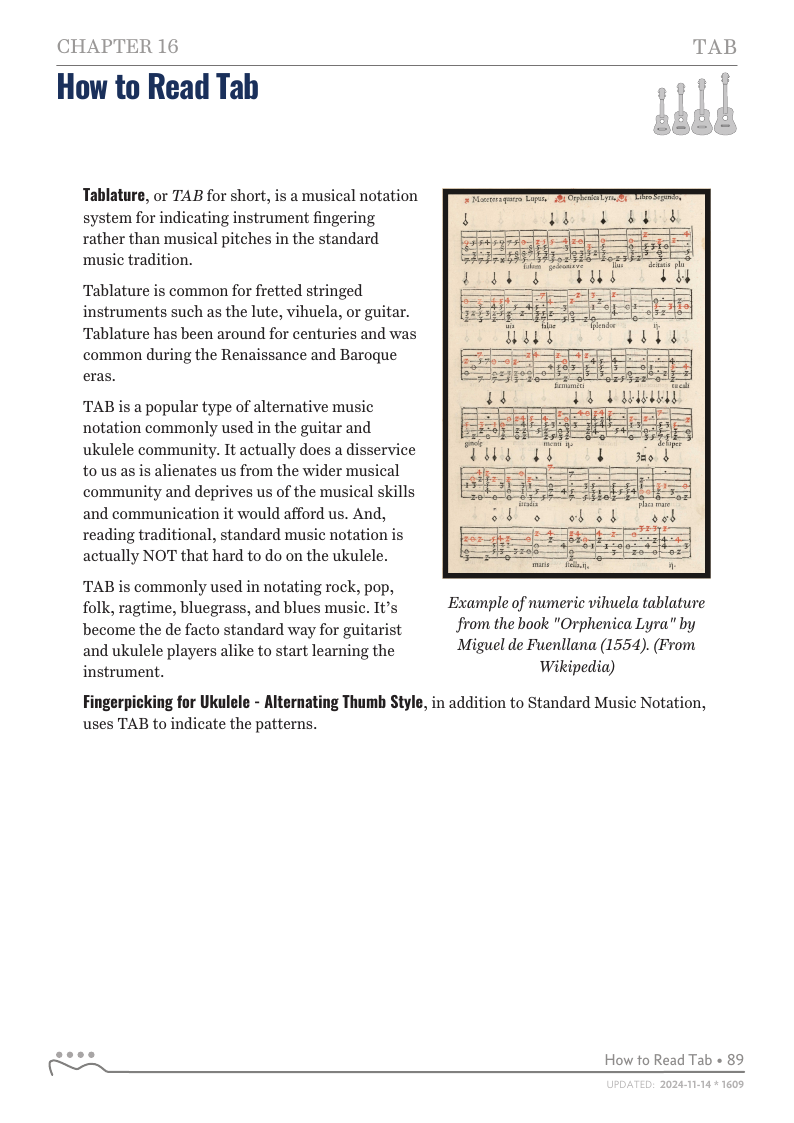
Tablature, or "TAB" for short, is a musical notation system for indicating instrument fingering rather than musical pitches in the standard music tradition. Tablature is common for fretted stringed instruments such as the lute, vihuela, or guitar. Tablature has been around for centuries and was common during the Renaissance and Baroque eras.
Alternating Thumb Style, Remembering the Patterns
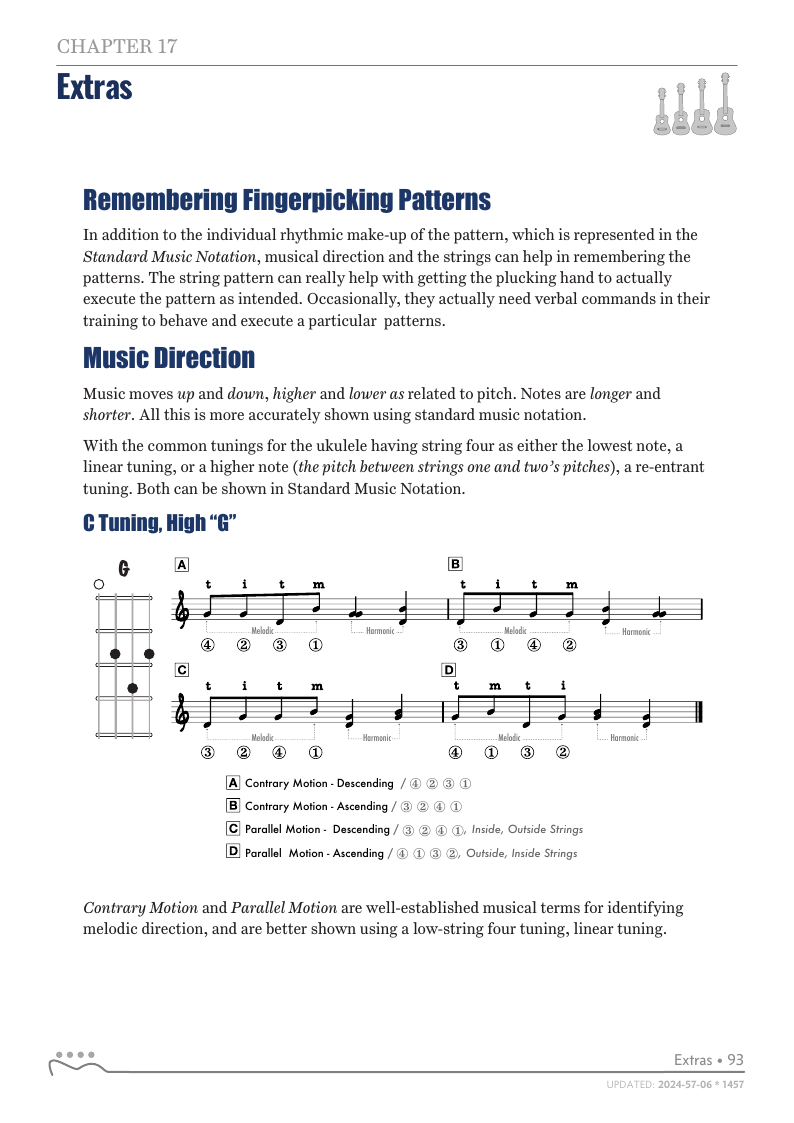
In addition to the individual rhythmic make-up of the pattern which is represented in the Standard Music Notation. Musical direction and the strings can help in remembering the patterns. The string pattern can really help with getting the plucking hand to actually execute the pattern as intended.
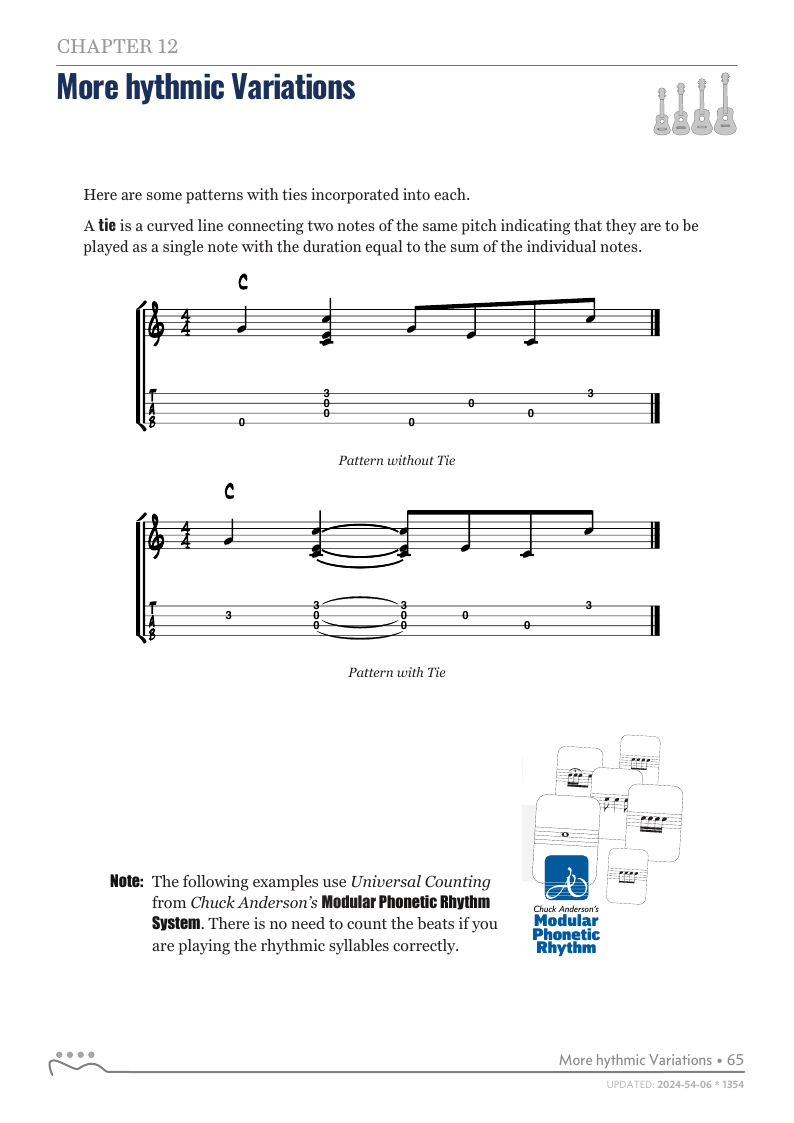
Alternating Thumb Style, Rhythmic Variations
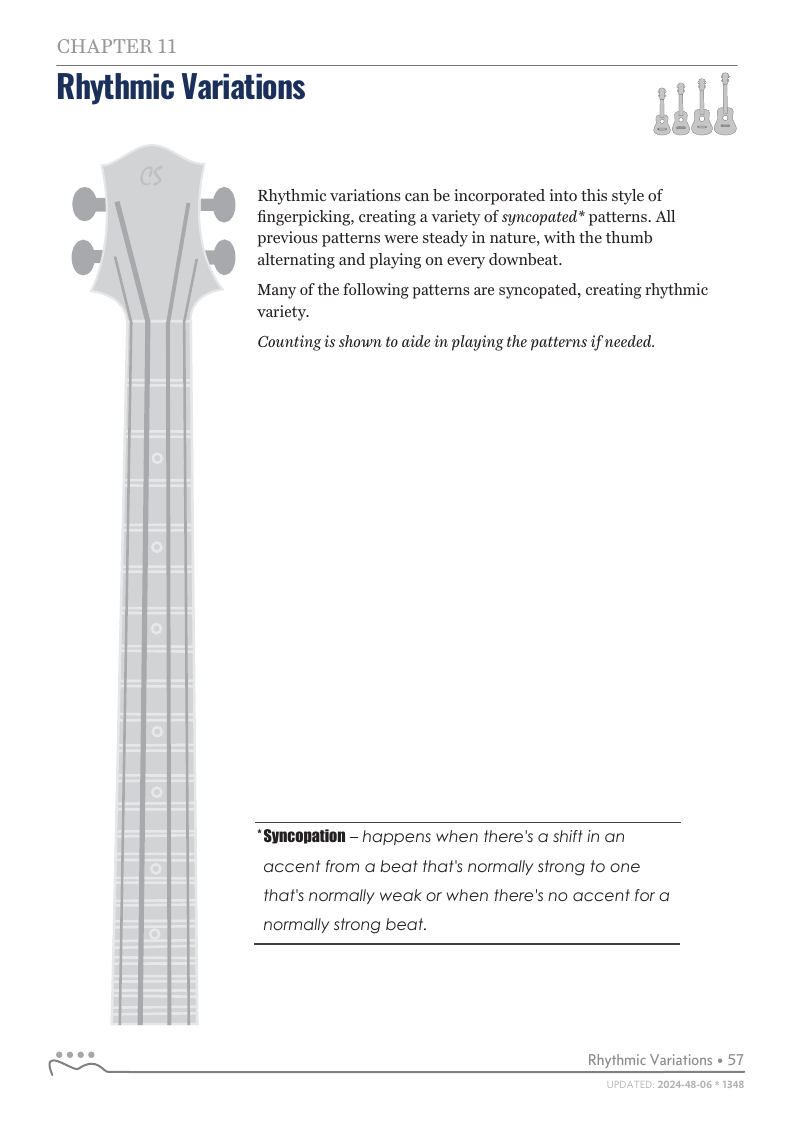
Rhythmic variations can be incorporated into this style of fingerpicking, creating a variety of syncopated patterns. All previous patterns were steady in nature, with the thumb alternating and playing on every downbeat. Many of the following patterns are syncopated, creating rhythmic variety.
Alternating Thumb Style, The Pinch
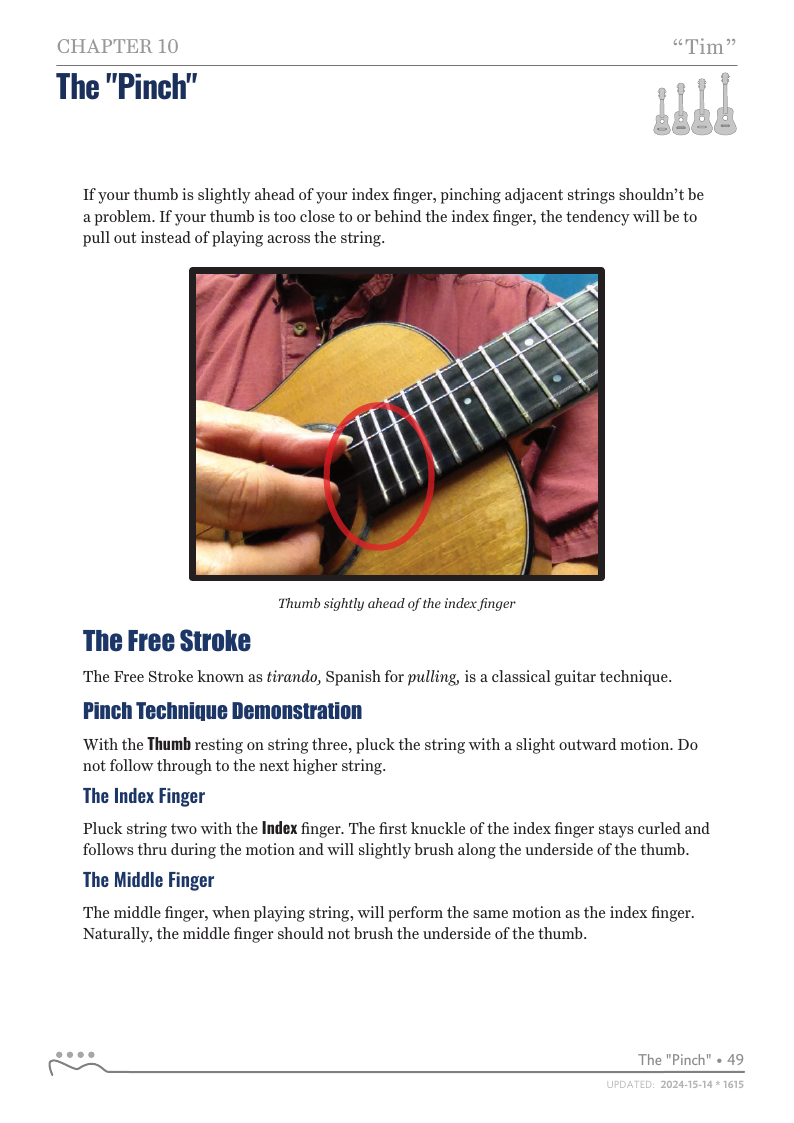
All the previous lessons in the "Fingerpicking for Ukulele, Alternating Thumb Style Series" where melodic, single notes only. This lesson introduces The *Pinch, where any one of the thumb/index finger or thumb/middle finger combinations can be played together - harmonically.
Alternating Thumb Style, Thumb and One Finger - Level Four
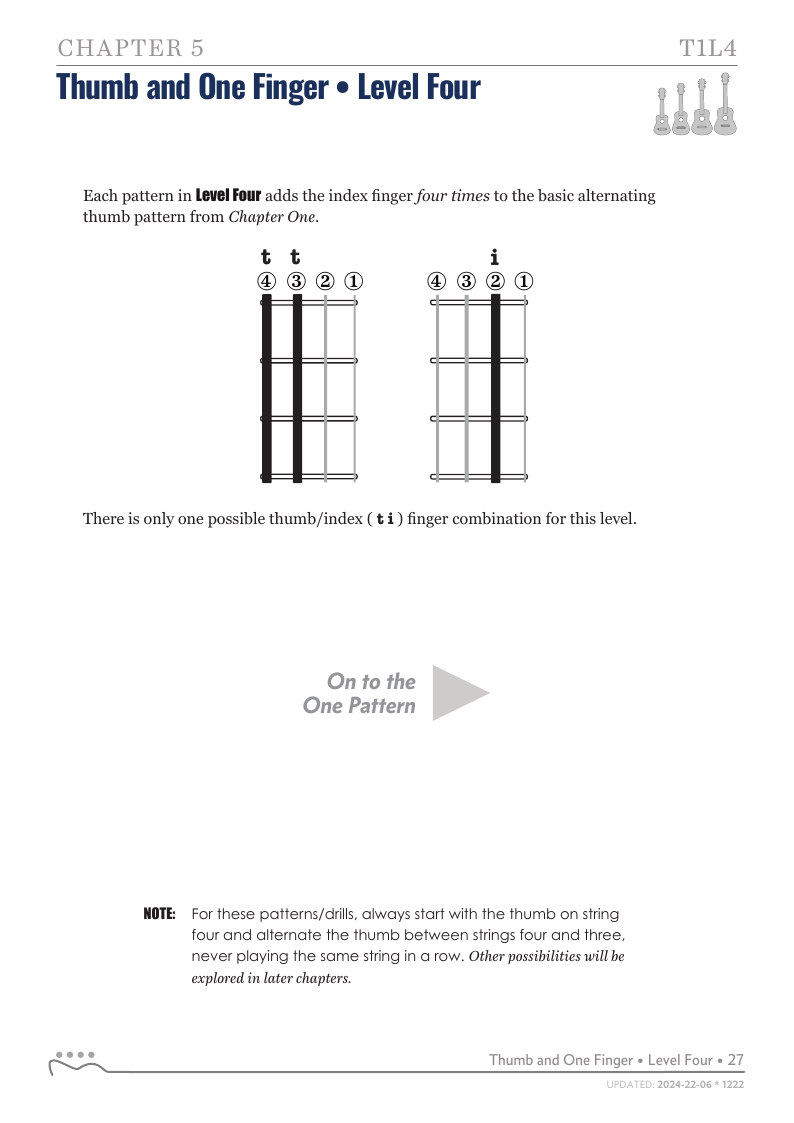
All the previous lessons in the "Fingerpicking for Ukulele, Alternating Thumb Style Series" where melodic, single notes only. This lesson introduces The *Pinch, where any one of the thumb/index finger or thumb/middle finger combinations can be played together - harmonically.
Alternating Thumb Style, Thumb and One Finger - Level One
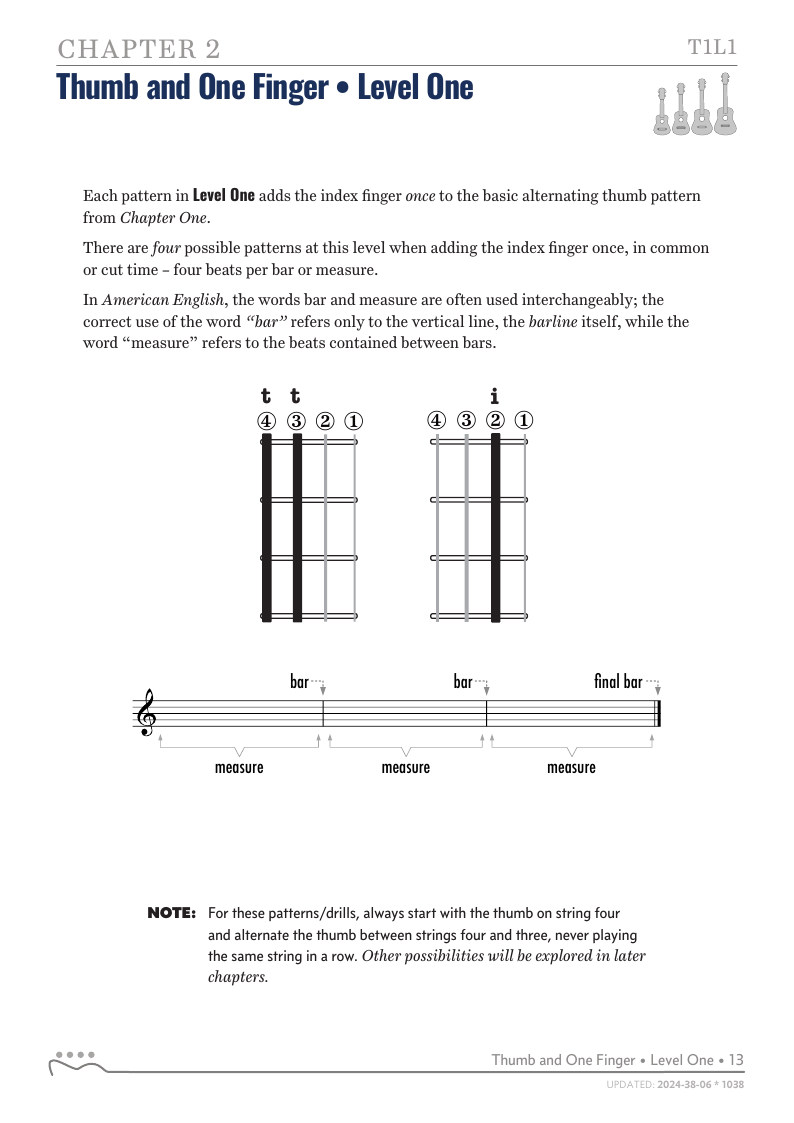
In this lesson we’re introducing the index finger once to the alternating thumb pattern mastered in the Alternate Thumb Fingerpicking Style - Introduction. There are four possible patterns when adding the index finger once in common or cut time.
Alternating Thumb Style, Thumb and One Finger - Level Two
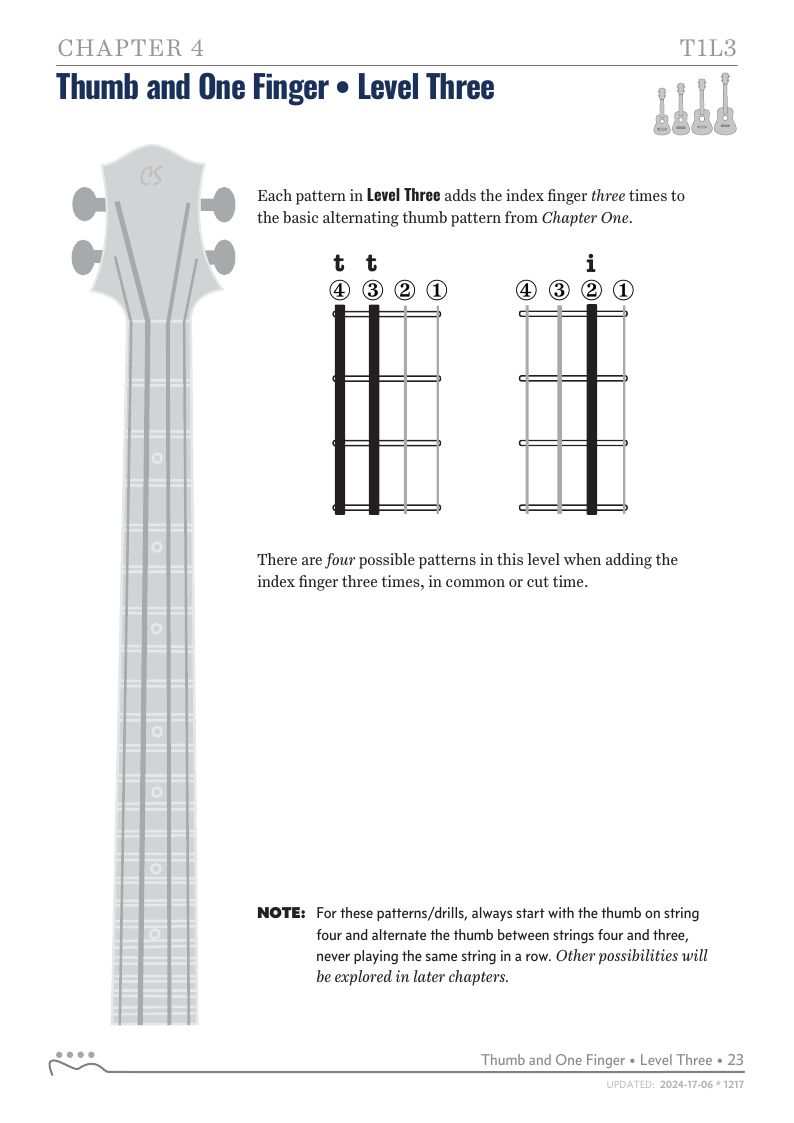
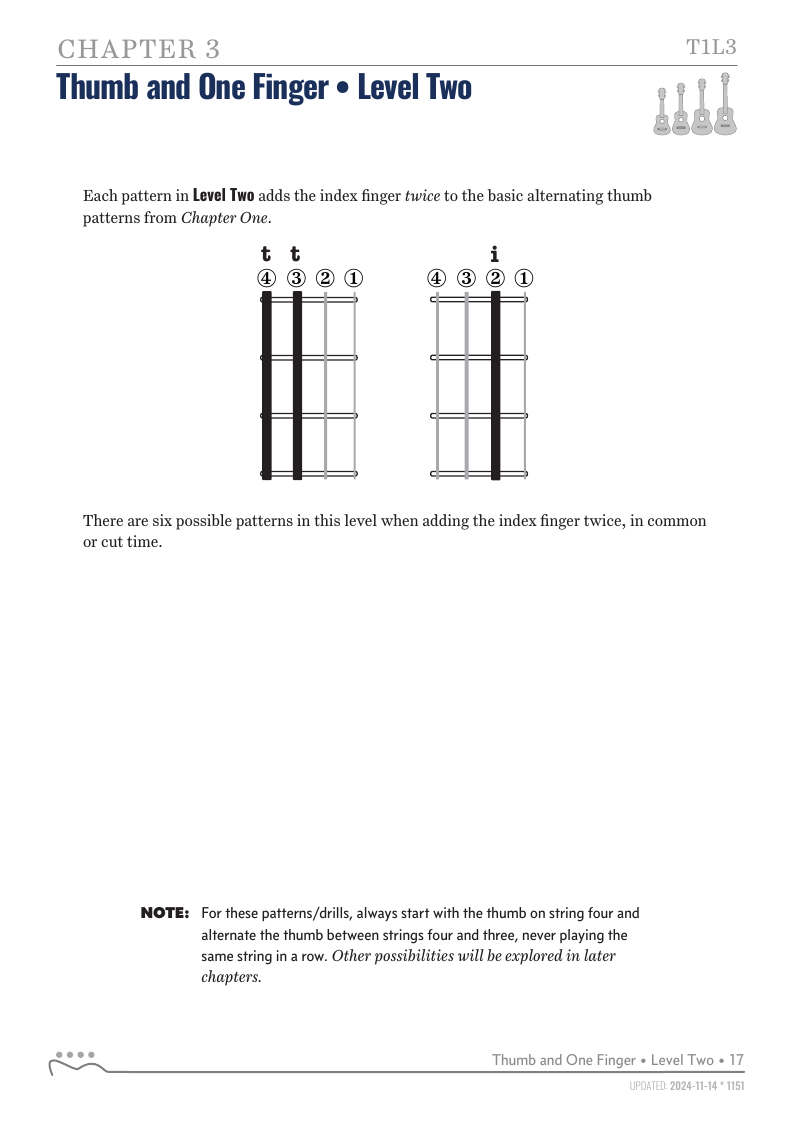
In this lesson we’re introducing the index finger twice to the alternating thumb pattern mastered in the Alternate Thumb Fingerpicking Style - Introduction. There are six possible patterns in common or cut time.ssible variations in this lesson.
Fingerpicking on `Ukulele - Alternating Thumb Style
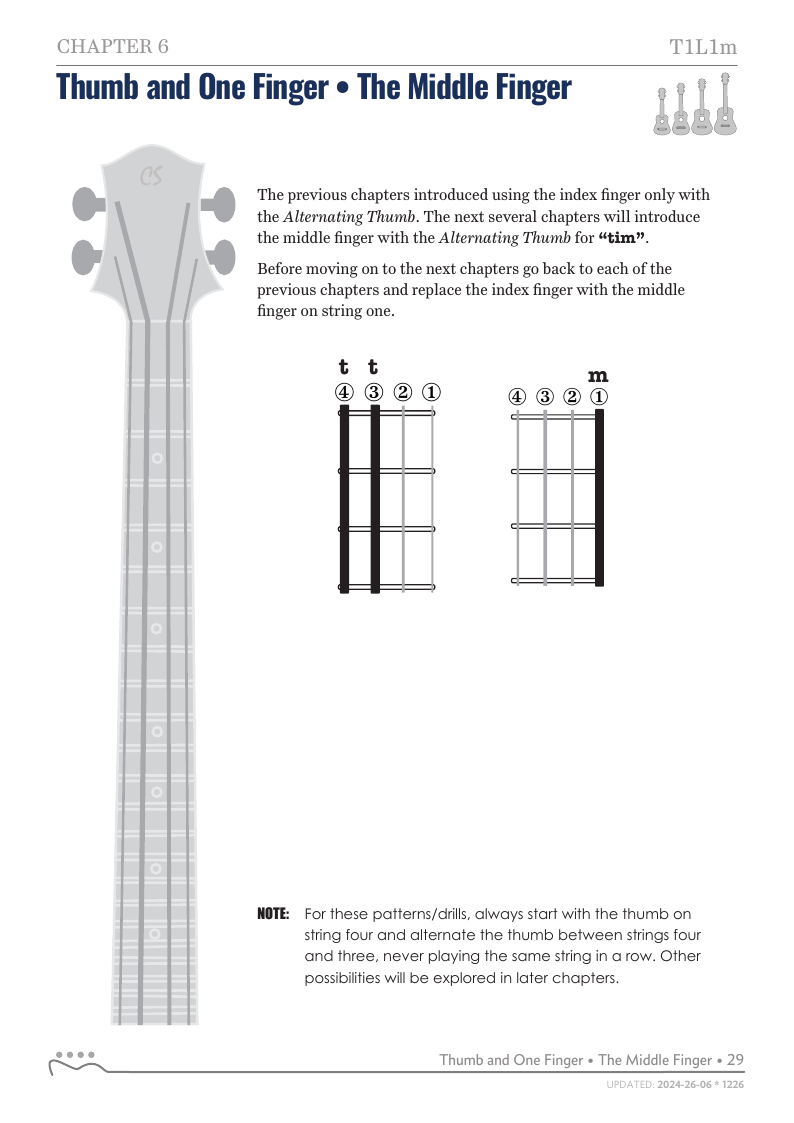
There are two common styles of fingerpicking on ukulele. This series of lessons explores the Alternating Thumb Style. A future series will explore the Thumb and three finger style, the traditional p i m a classical guitar style that we’ll adapt to ukulele.