Learning Ukulele with Curt
Jazz Ukulele: Comping
Comping – short for accompaniment is simply the music and instruments that are "accompanying" the melody. Typically a term used by jazz musicians and done by the musicians playing an instrument capable of playing chords, harmonically, ie: multiple notes at a time. The ukulele like the guitar and piano is one such instruments. Comping is Chord Voicings and Rhythm
.

9 August 2026
Comping
– short for accompaniment is typically on a chordal instrument such as piano, guitar, ukulele, to support a soloist or ensemble. It involves playing chords, chordal fragments, or rhythmic patterns that complement the soloist's improvisation or the overall musical texture. Comping is an essential skill for jazz musicians, as it helps to create a harmonic framework and rhythmic groove for the music, while also interacting dynamically with the soloist or other musicians in the ensemble.
It's the Chords and the style ( Rhythm ) that you play the chords that comprise comping. Typically improvised depending on the style of music being played.
Start with the lesson Core Chords – The Big Six – Building a Solid Chord Foundation for building your 4-part contemporary chord foundation and the Modular Phonetic Rhythm, The Foundation and Workbook 1 below.
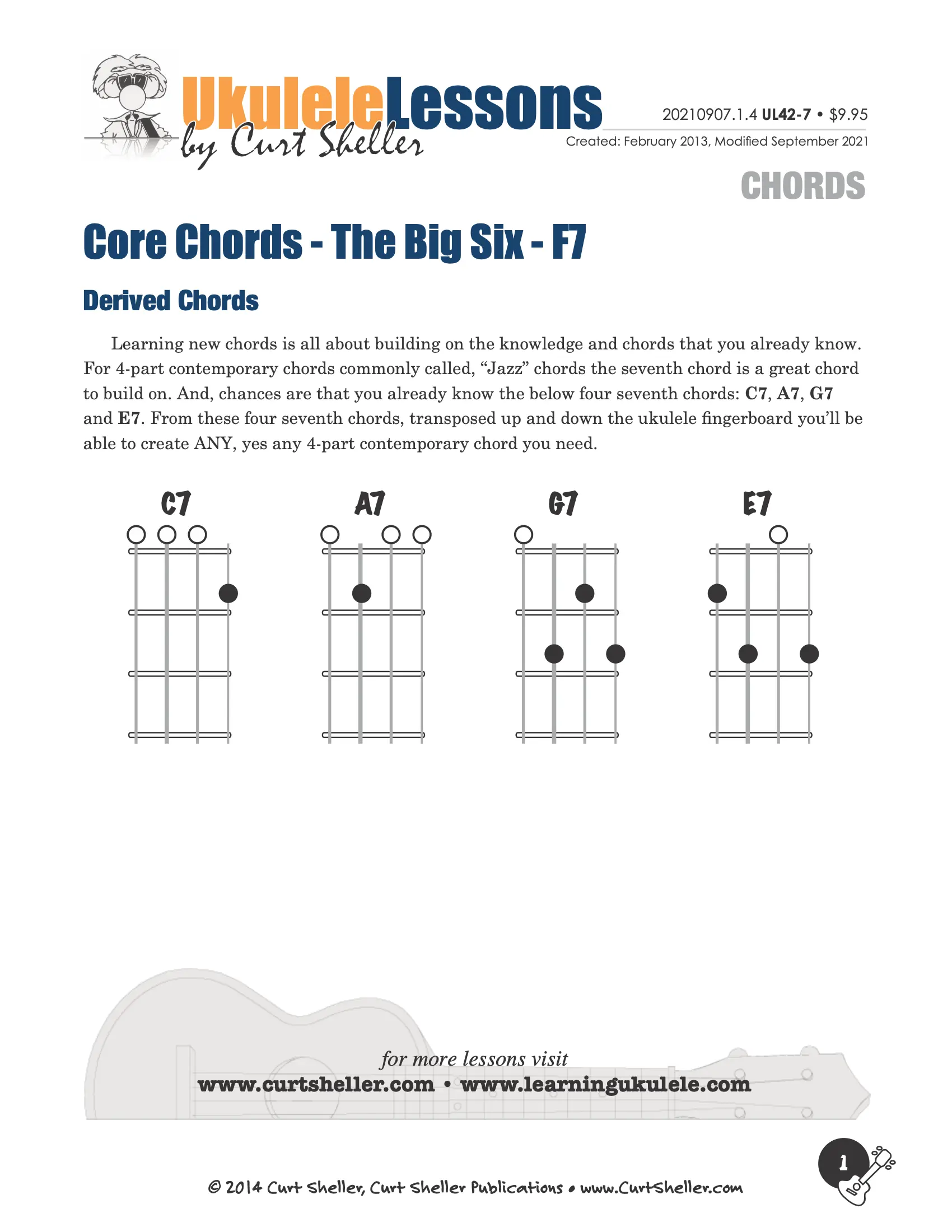
Core Chords - The Big Six - Building a Solid Chord Foundation
The Big Six Core Chords is a series of lessons for building your core, essential 4-part chords. These chords commonly called jazz chords, are really just 4-part chords used in a wide range of musical styles. These chords include: Seventh , Major Seventh, Minor Seventh, Half Diminished Seventh or Minor Seven Flat Five, Diminished Seventh, and Augmented Seventh. These six chords form a core set of chords.
For rhythmic styles start with the Modular Phonetic Rhythm books and series of lessons I have available.
Modular Phonetic Rhythm, The Foundation and Workbook 1
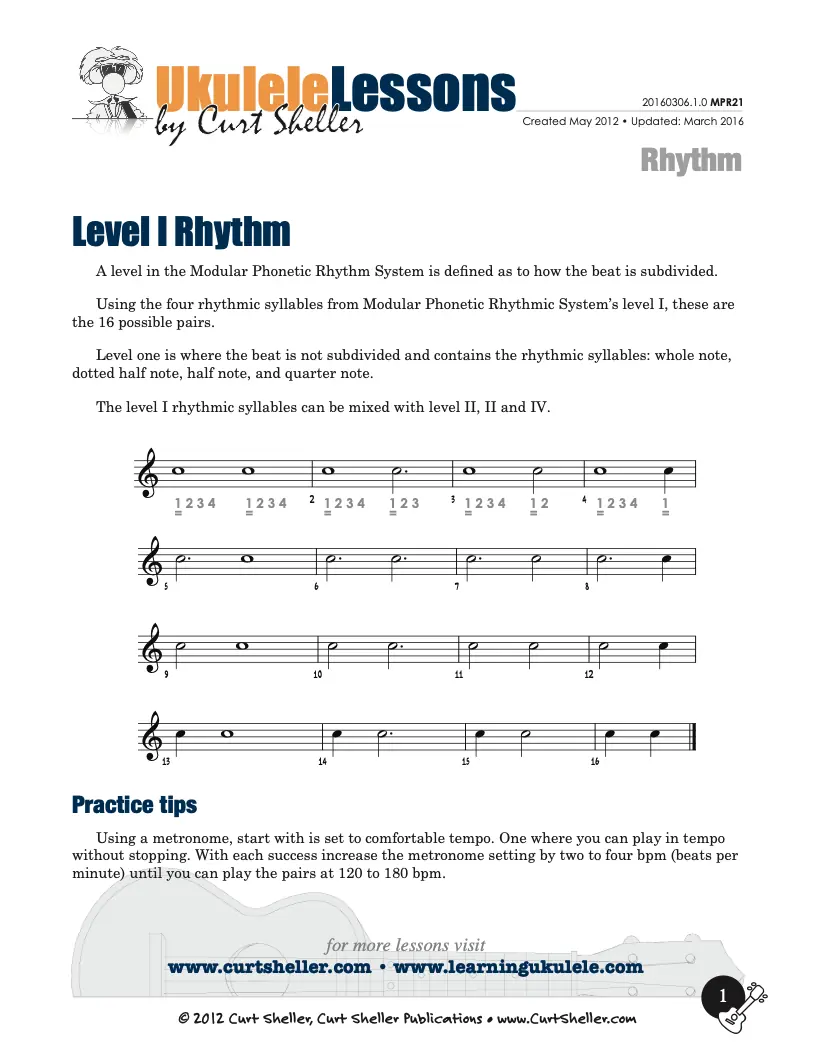
Modular Phonetic Rhythm represents a significant advance in the teaching and application of rhythm. Eliminating many inefficient aspects of rhythm education, Modular Phonetic Rhythm streamlines the traditional educational approach, resulting in a reflexive reaction to rhythm.


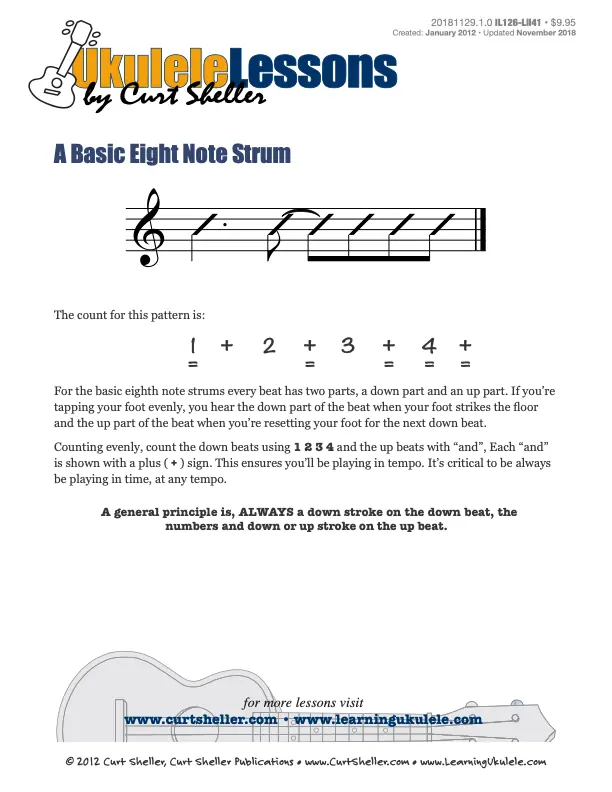
Basic `Ukulele Strums and Variations
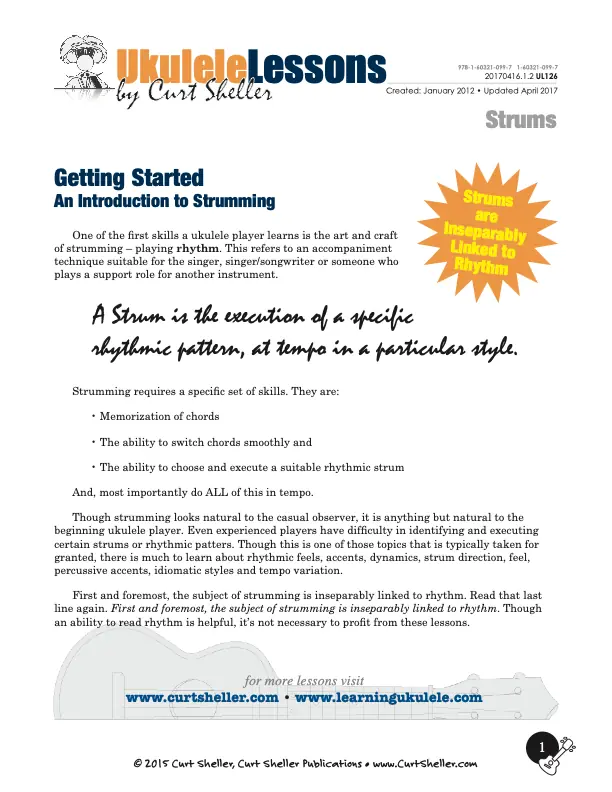
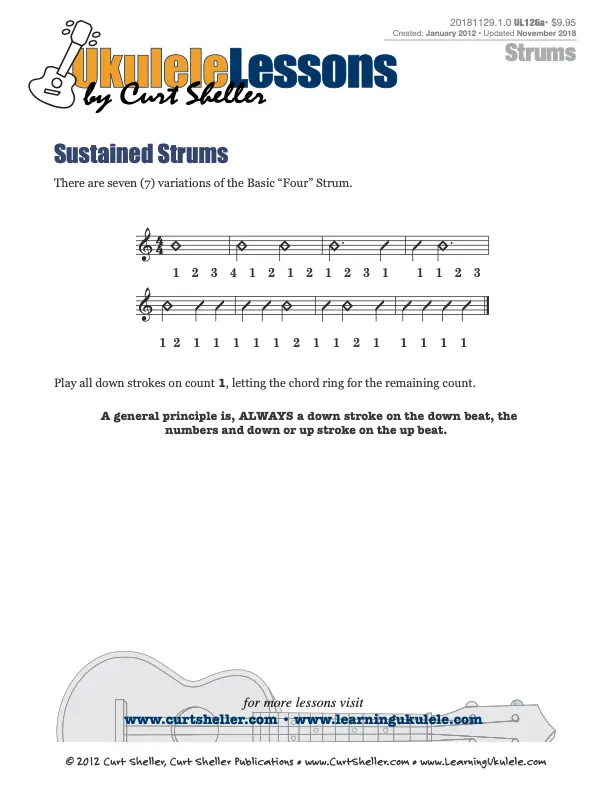
"A strum is the execution of a specific rhythmic pattern, at tempo, in a particular style." A strum can be broken down into its rhythmic syllables. These rhythmic syllables are defined by what particular style is being performed. Basic ukulele strums and variations to get you started.

QuickStart Chord Progressions Play-along Tracks, Introduction and Tuning Notes
The QUICKSTART Rhythm Section CD contains 24 unique styles designed for contemporary lead guitar. Each track is devoted to a scale covered in the QUICKSTART Scale Fingerings series of books. There are four background tracks for each scale, featuring the chords of the scale. These tracks give you the opportunity to explore the sound of each scale in an improvisational setting.

Modular Phonetic Rhythm
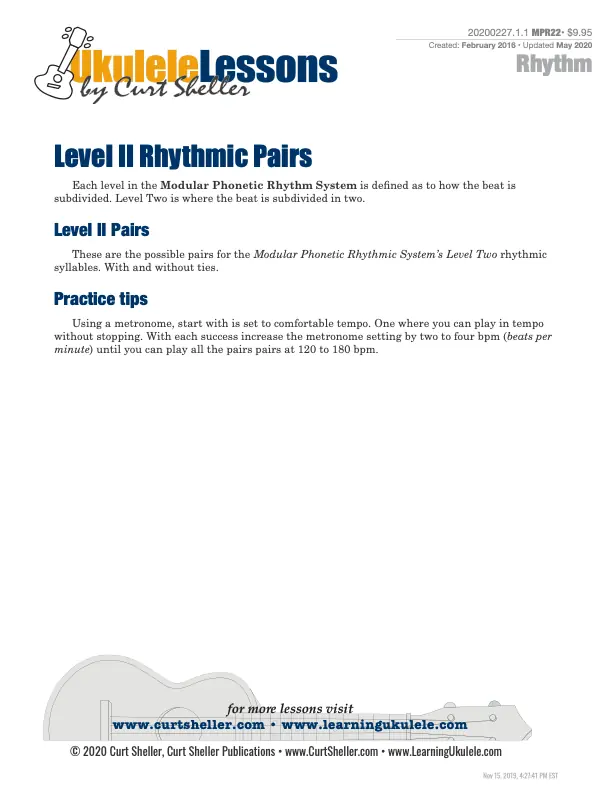
"Modular Phonetic Rhythm" by Chuck Anderson represents a significant advance in the teaching and application of rhythm. Eliminating many inefficient aspects of rhythm education, Modular Phonetic Rhythm streamlines the traditional educational approach, resulting in a reflexive reaction to rhythm. This approach is applicable to all ages and to all styles of music.
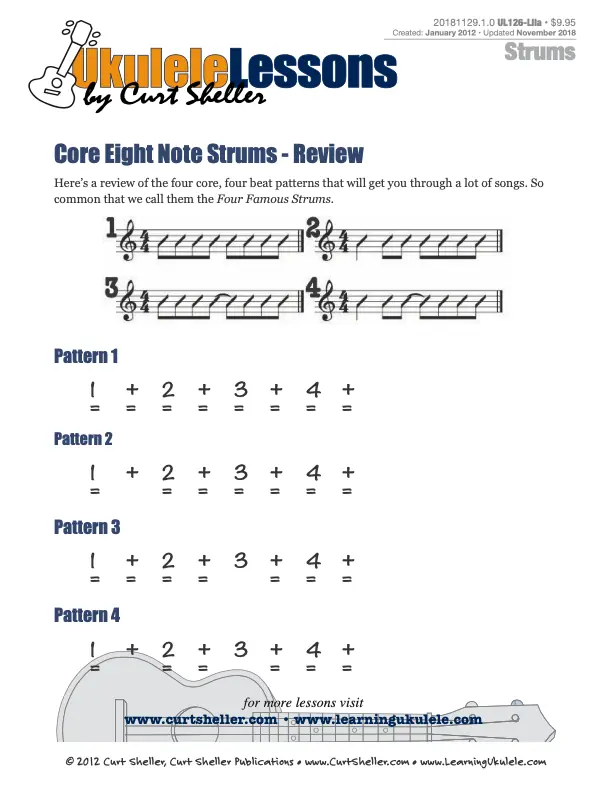
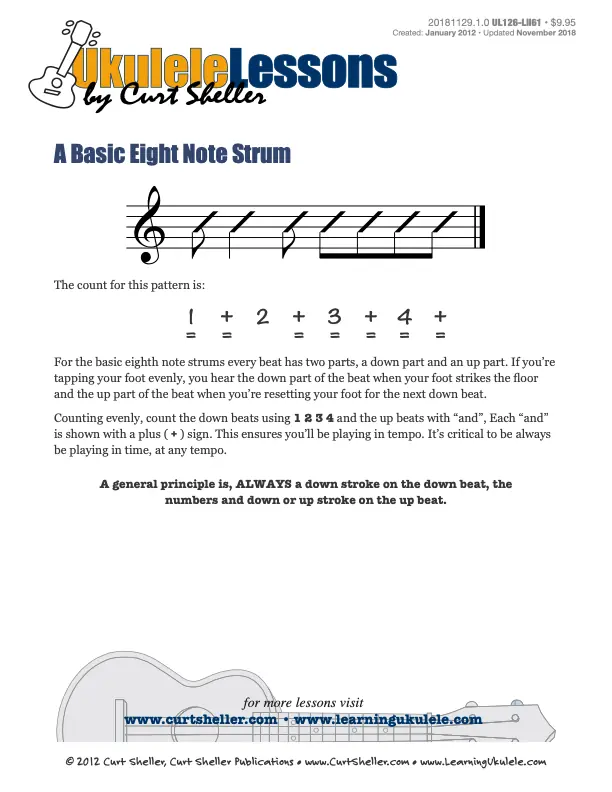
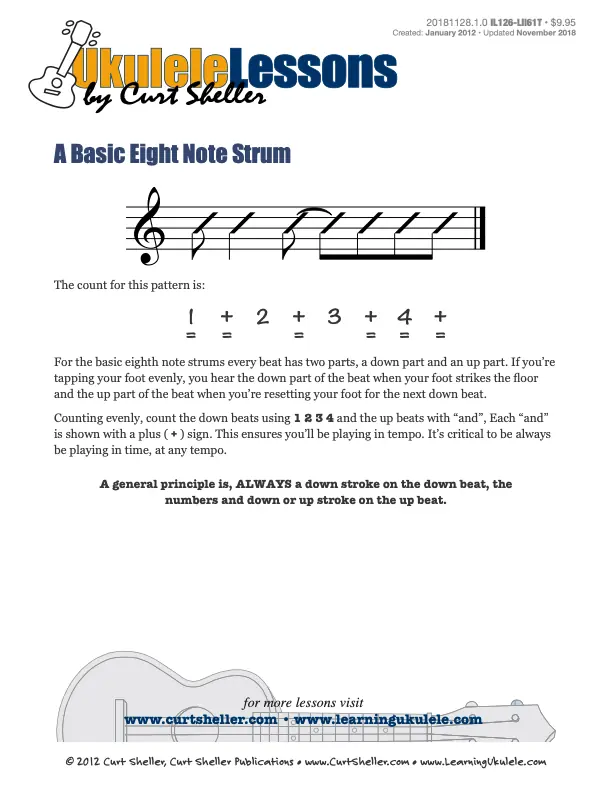
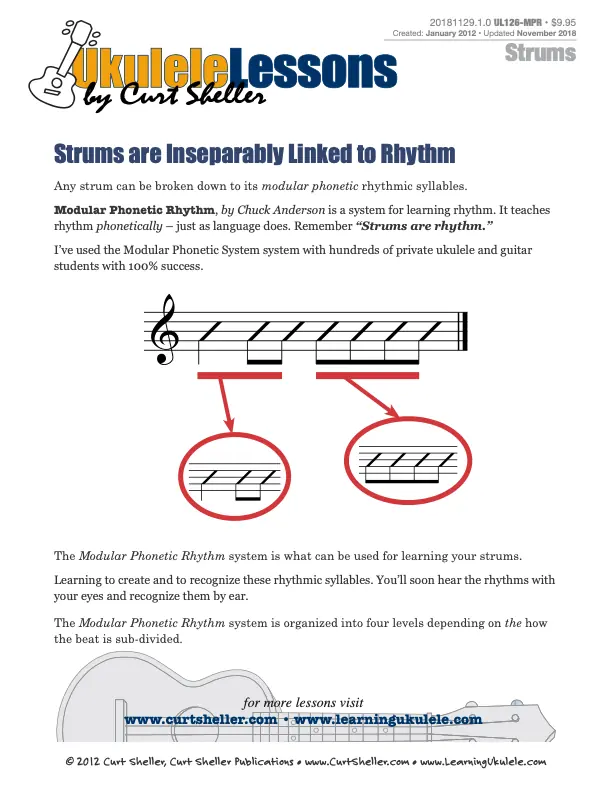
`Ukulele Strums and The Modular Phonetic Rhythm System
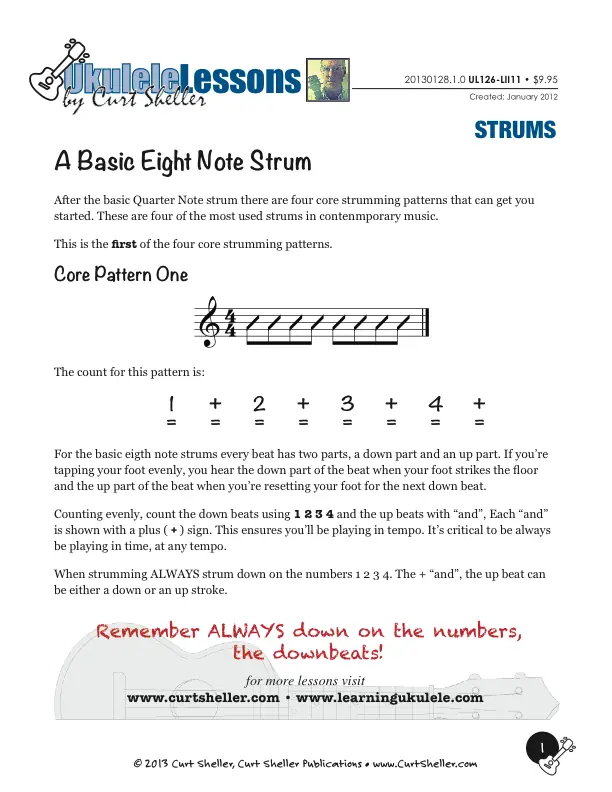
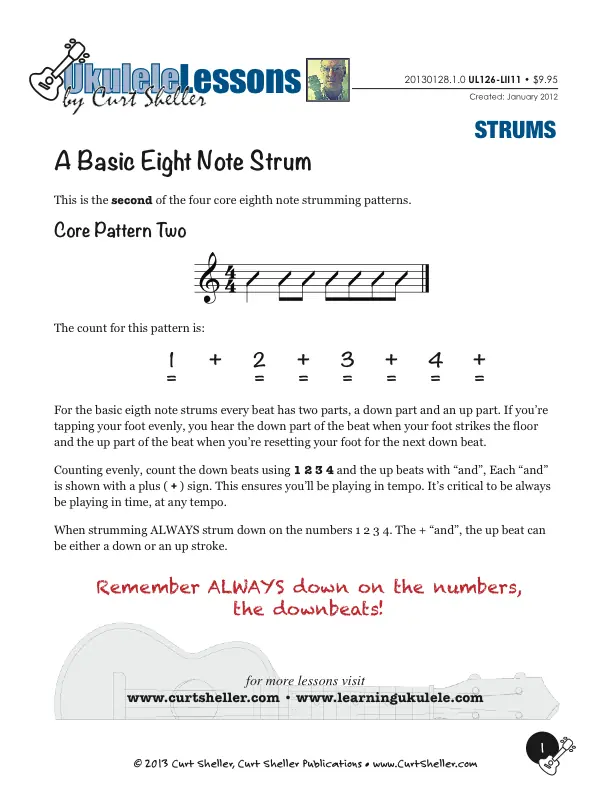
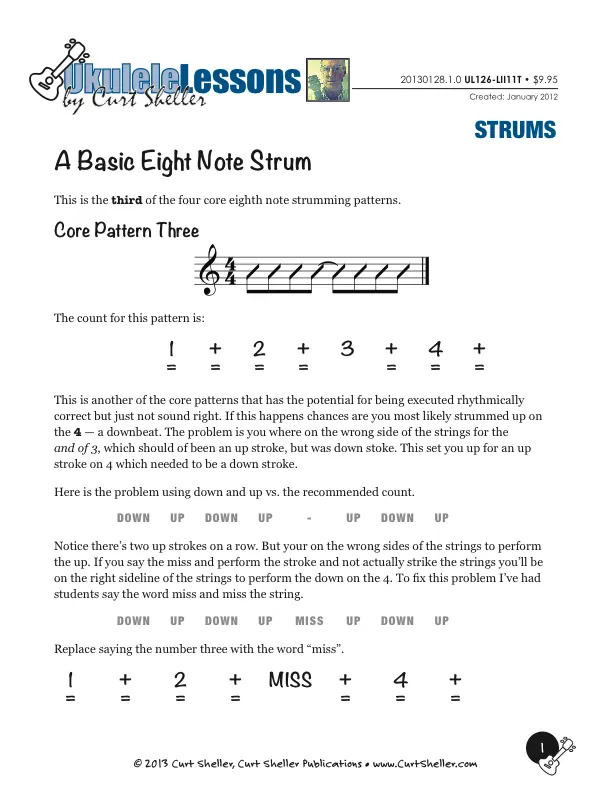
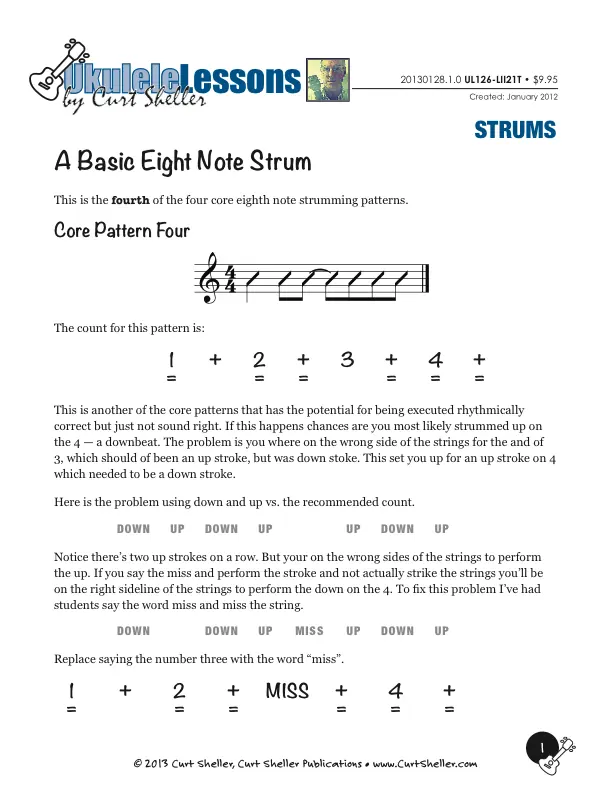
Strums are Inseparably Linked to Rhythm. Any strum can be broken down to its Modular Phonetic rhythmic syllables. Modular Phonetic Rhythm, by Chuck Anderson is a system for learning rhythm. It teaches rhythm phonetically - just as language does. Remember 'Strums ARE rhythm'
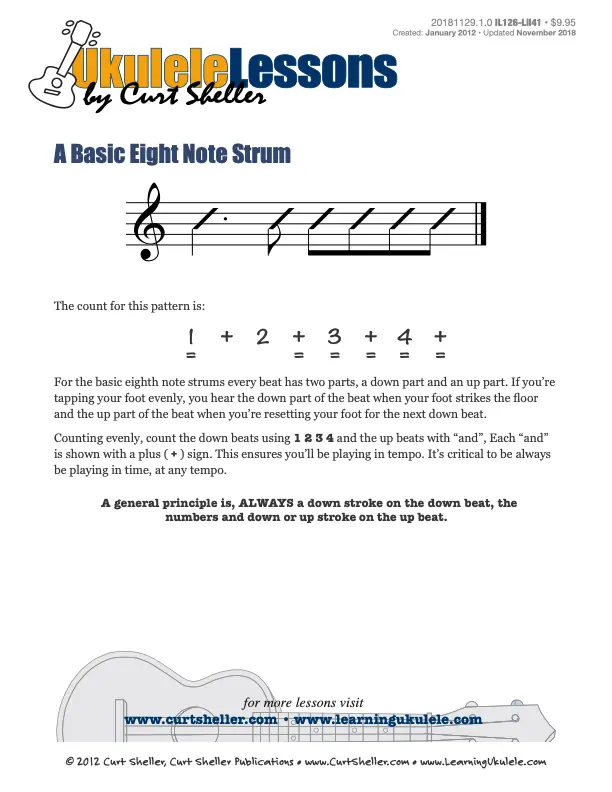
`Ukulele Strums - Core Pattern 4.1
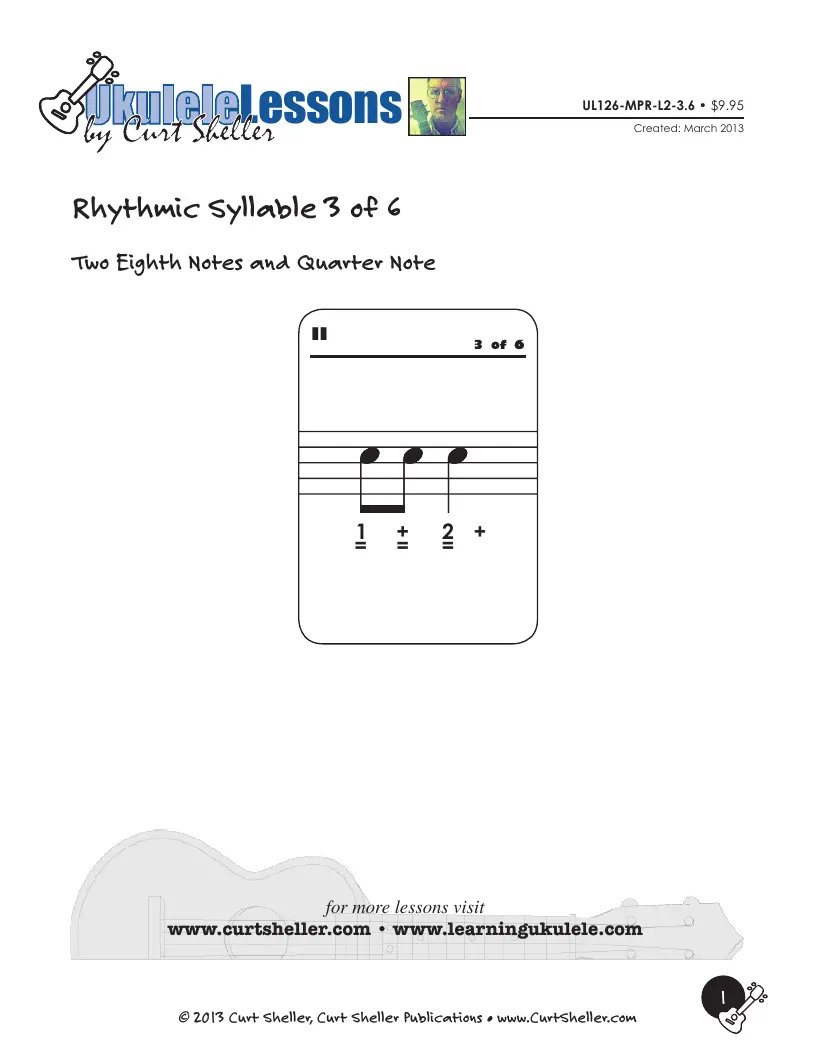
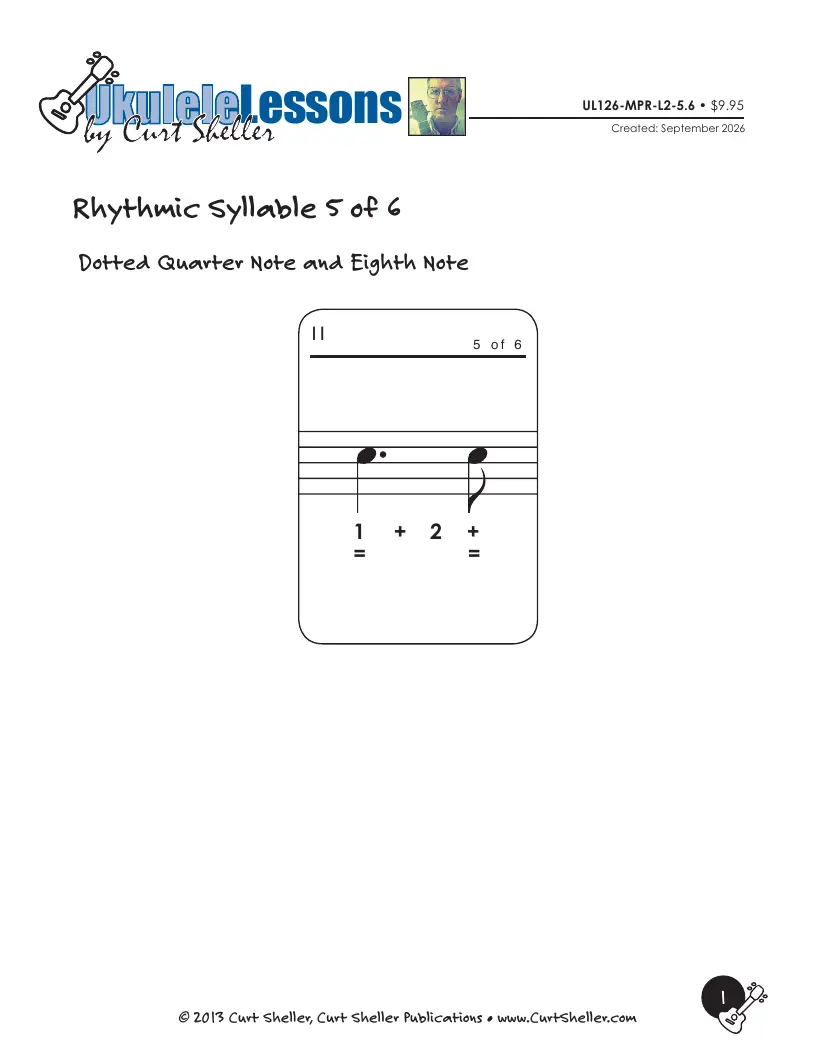
Another one of the 72 possible strumming patterns based of the Modular Phonetic Rhythm systems level II rhythmic syllables. A dotted quarter note and one eight note to four eight notes. Basically one rhythmic rhythmic syllable from the Modular Phonetic Rhythm tied to another syllable from the system.
Playing in Time
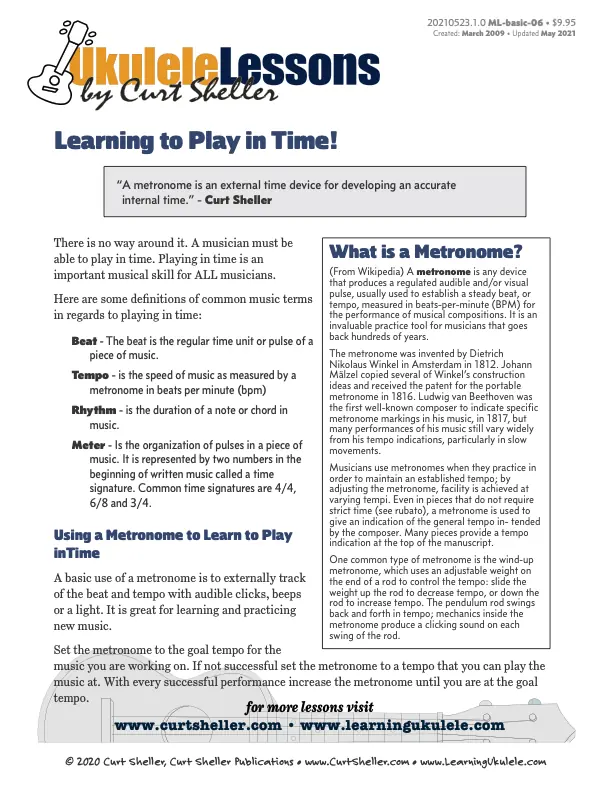
Playing in time is an essential skill that every musician must possess. There are no shortcuts or alternatives when it comes to this aspect of music. Keeping your place while playing is a crucial lesson that focuses on honing your ability to maintain a consistent tempo and rhythm throughout your performance.


Quarter Note Strum
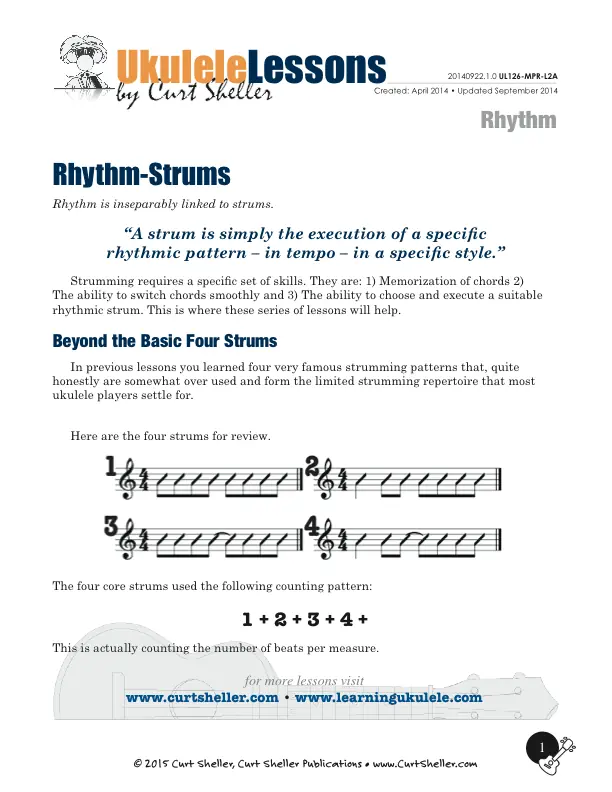
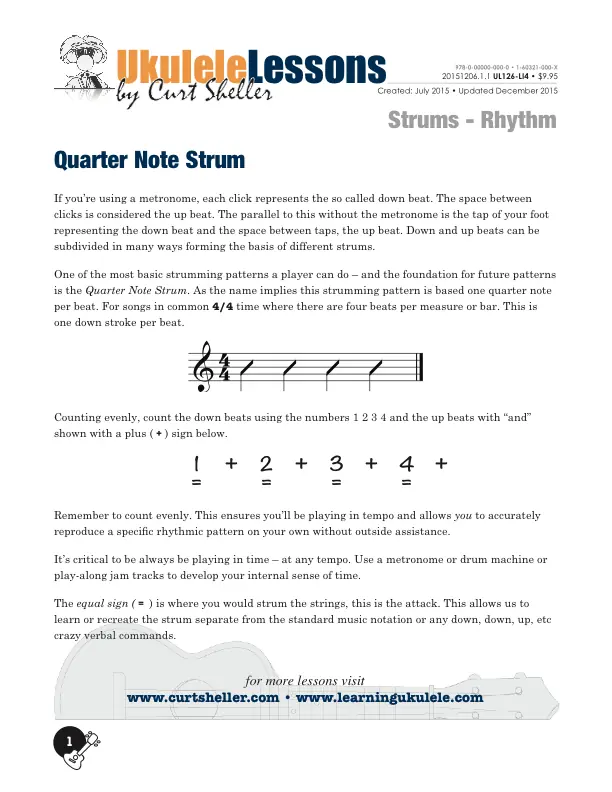
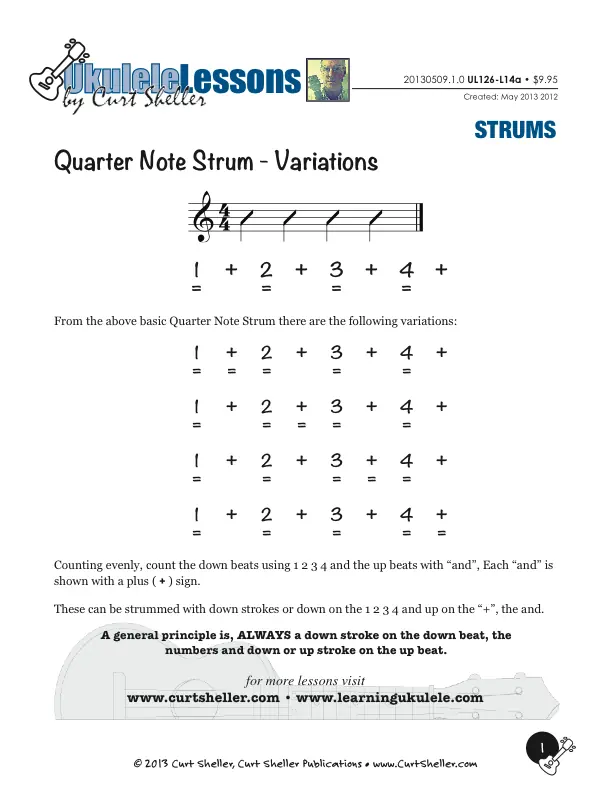
Chords and music are organized into bars or measures with the most common number of beats per bar or measure being four. One of the most basic strumming patterns and the foundation for ALL future strumming is the "Quarter Note Strum". As the name implies this strumming pattern is one quarter note per beat.
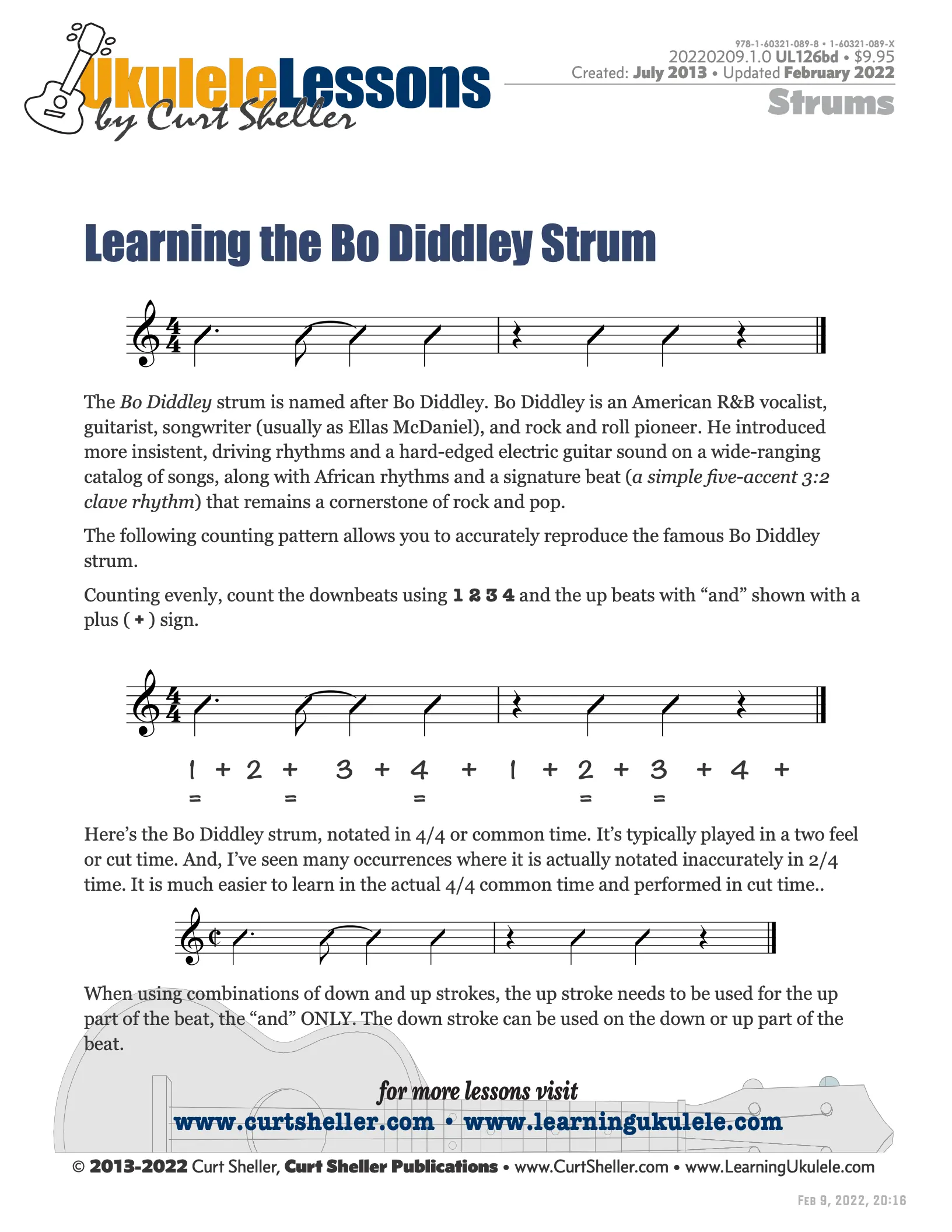
Learning the Bo Diddley Strum
The Bo Diddley strum is named after Bo Diddley. Bo Diddley is an American R&B vocalist, guitarist, songwriter ( usually as Ellas McDaniel ), and rock and roll pioneer. He introduced more insistent, driving rhythms and a hard-edged electric guitar sound on a wide-ranging catalog of songs, along with African rhythms and a signature beat (a simple five-accent clave rhythm) that remains a cornerstone of rock and pop.

Reading for `Ukulele - Lesson Six, Ties
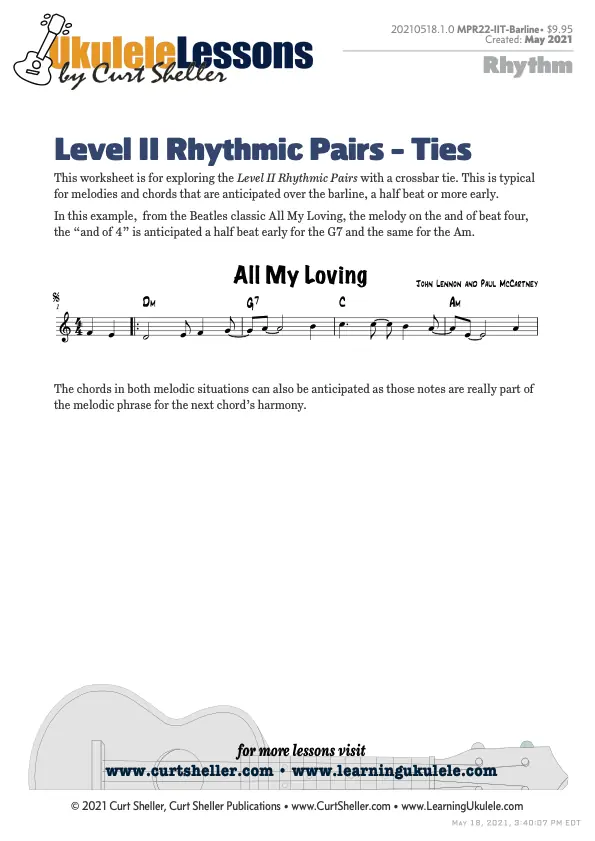
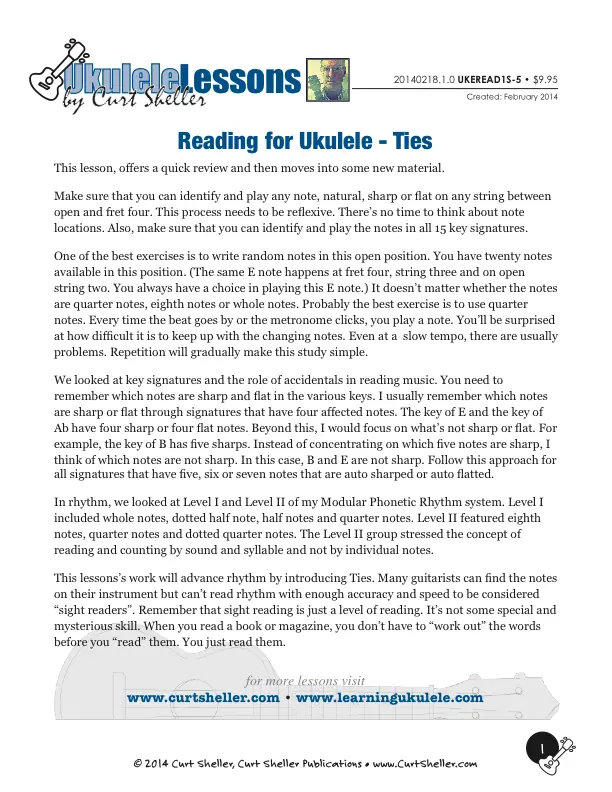
This lessons's work will advance rhythm by introducing Ties. Many ukulele players can find the notes on their instrument but can't read rhythm with enough accuracy and speed to be considered "sight readers". Remember that sight reading is just a level of reading. It's not some special and mysterious skill. When you read a book or magazine, you don't have to "work out" the words before you "read" them. You just read them.

The Muted Strum
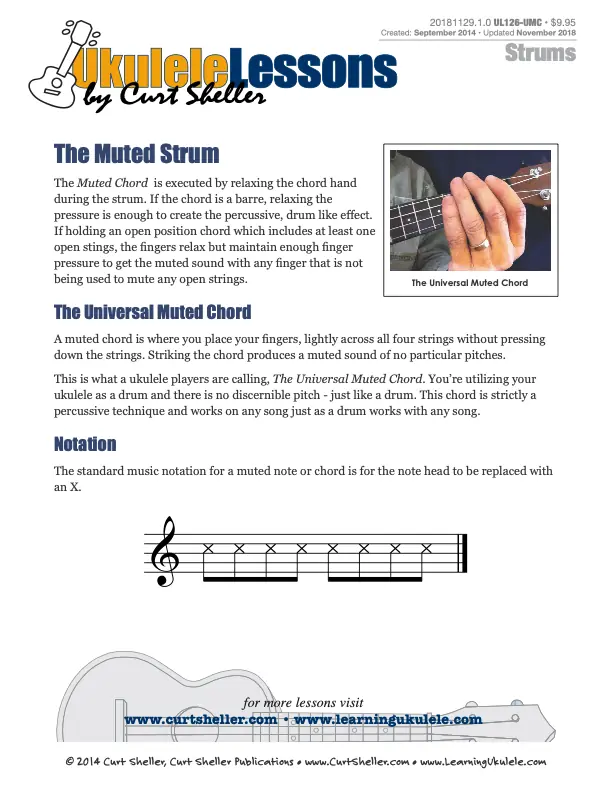
The muted strum is executed by relaxing the chord hand during the strum. If the chord is a barre, relaxing the pressure is enough to create the percussive, drum like effect. If holding an open chord, the fingers relax but maintain enough finger pressure to get the muted sound. This is what a few players are calling, The Universal Muted Chord. You're utilizing your ukulele as a percussive instrument and there is no discernible pitch - just like a drum. This chord works on any song just as a drum works with any song and does't care what the key is. This is a great chord to use when learning a new strum.

Triplet Based Strums - 12/8
A triplet, as the “tri” in the name implies, means three. It’s the subdivision of the beat into three even parts. Notice that I had used the word three for the number 3 in my writing. So, if I’m counting any beat which can be sub divided by three, it’s 1 2 3. No need to use words such as trip-o-let or one triplet, two triplet, etc to count.

Rhythm - Avoid at Your Own Peril
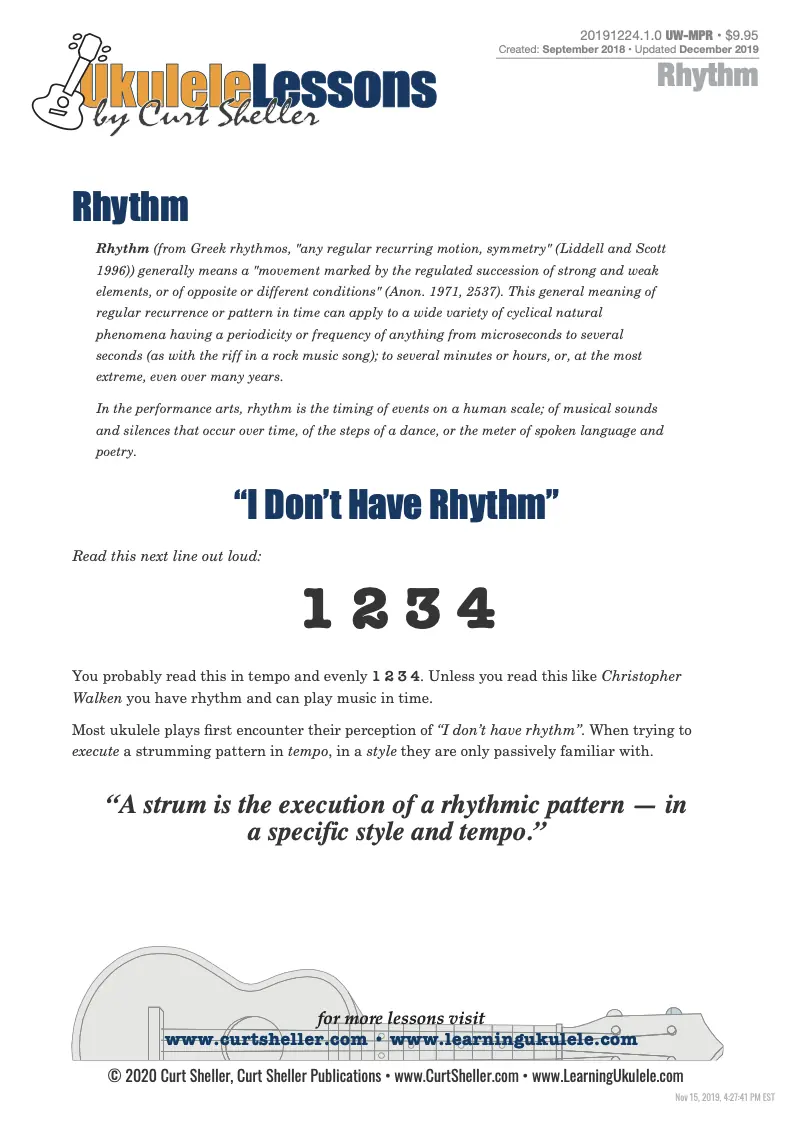
The often neglected and taken for granted subject of Rhythm. Music is Melody, Harmony and Rhythm. We are drawn, initially to music by melody at a very early age, with the instrument of our voice. With ukulele you typically learn chords - the harmony and never really dive into learning rhythm. Unless you're a drummer we take rhythm for granted.