
Published:
Updated:
Learning Ukulele with Curt
Harmonic Analysis - Conclusion
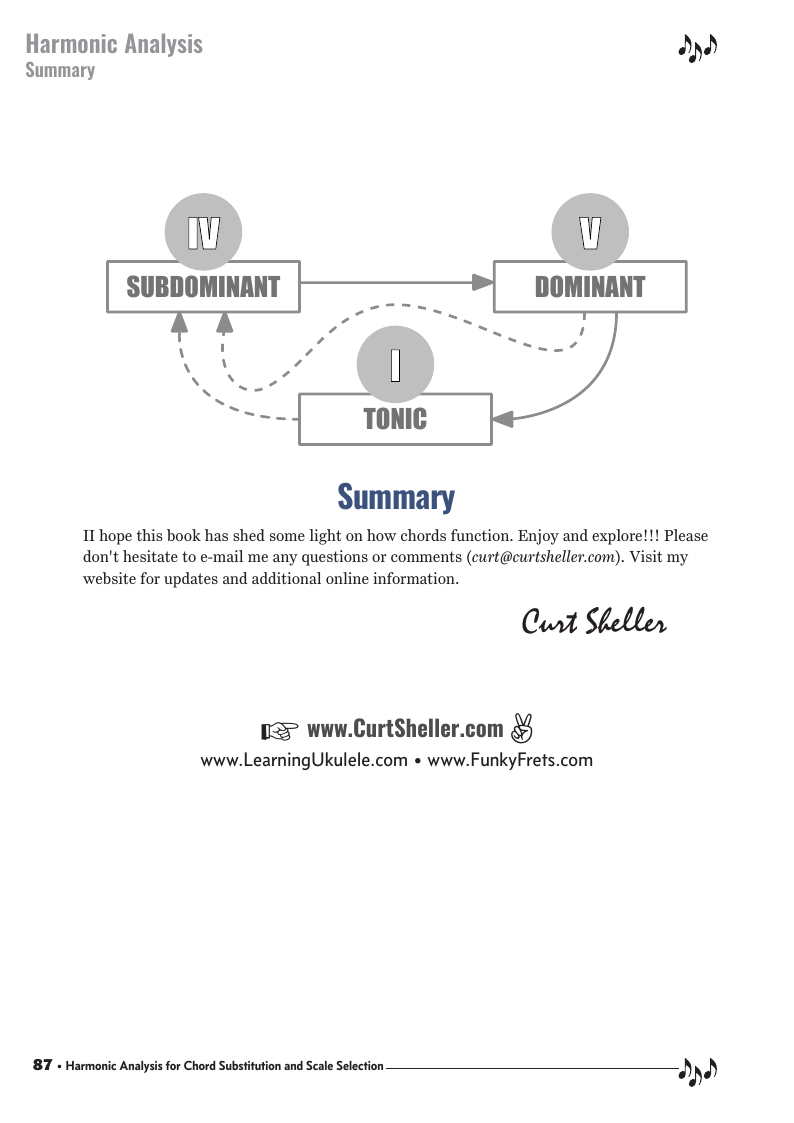
HARMONIC ANALYSIS for Scale Selection and Chord Substitution explored the six harmonic principles for analyzing chord progressions and songs using tradition tonic-dominant harmony and the scale modes.
Author(s): Curt Sheller Publisher: Curt Sheller Publications Code: MLRMAe-17
Main Category: Theory Main Instrument: Any
Categories: Chords, Scales, Theory, Modes, Dominant, RMA, Harmony, Substutition

2026-08-23
Show Series Lessons
Series Home
Number of Pages: 2
If you're a registered site member and have the correct permissions you can view ALL the pages of this PDF at a larger size using the LearningUkulele.com Online PDF Viewer (button below).
Download PDFThis Download is NOT part of your LearningUkulele.com & Learning Ukulele with Curt membership level.
Sign-up for Premium Site Access or Upgrade Your Plan to download this PDF or your can purchase a copy for download
Sign In for Access…Contact Us if there are any issues.
HARMONIC ANALYSIS for Scale Selection and Chord Substitution explored the six harmonic principles for analyzing chord progressions and songs using tradition tonic-dominant harmony and the scale modes.
This series, is the book Harmonic Analysis for Chord Substitution and Scale Selection by Curt Sheller broken out into individual lessons with additional examples and content. Always, the latest version of the book.
Other tonalities can be created using Pentatonic scales and more advanced and exotic scales used in more advanced harmonies. There are many scales and modes possible beyond those covered in this book.
There are several sources that list additional scales and modes.
- Wikipedia is a good place to start: List of Scales and Modes .
More Harmonic Analysis - Conclusion
content below, continue exploring...
More Harmonic Analysis - Conclusion
Harmony & Theory: Further Reading
Really Wany to Know How Chords Work?

The Chord Scale Theory & Jazz Harmony
Published: 2013
Barrie Nettles, Richard Graf — Jazz harmony, as taught at the Berklee College of Music is based on the so called Chord Scale Theory. This method - further developed - is now available as a comprehensive textbook for the first time. Emerged from practice and designed for practical use, it provides theoretical knowledge necessary for improvisation, composing, and arranging. This comprehensive textbook is a must for beginners, intermediate or advanced students.
Twentieth-Century Harmony: Creative Aspects and Practice
Published: 1961
Vincent Ludwig Persichetti (June 6, 1915 – August 14, 1987) was an American composer, teacher, and pianist. An important musical educator and writer, he was known for his integration of various new ideas in musical composition into his own work and teaching, as well as for training many noted composers in composition at the Juilliard School.
Harmony
Published: 1941
Walter Hamor Piston, Jr. (January 20, 1894 – November 12, 1976), was an American composer of classical music, music theorist, and professor of music at Harvard University.
Piston wrote four books on the technical aspects of music theory which are considered to be classics in their respective fields: Principles of Harmonic Analysis, Counterpoint, Orchestration, and Harmony. The last of these introduced for the first time in theoretical literature several important new concepts that Piston had developed in his approach to music theory, notably the concept of harmonic rhythm, and the secondary dominant.
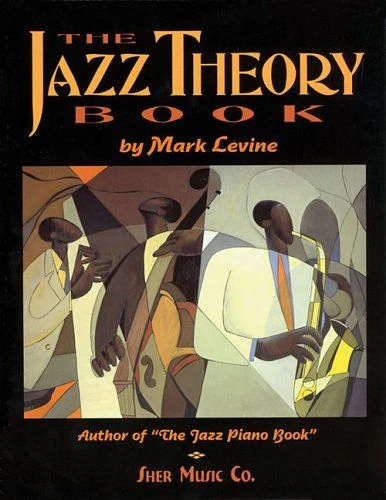
The Jazz Theory Book
Published: 1995
Mark Levine — Endorsed by Jamey Aebersold, James Moody, Dave Liebman, and others, The Jazz Theory Book presents all the information any student of jazz needs in an easy-to-understand, yet thorough, manner. For intermediate to advanced players, and written by one of the acknowledged masters of jazz, it is used by universities around the world.
MORE INFO: More Info & Buy Now
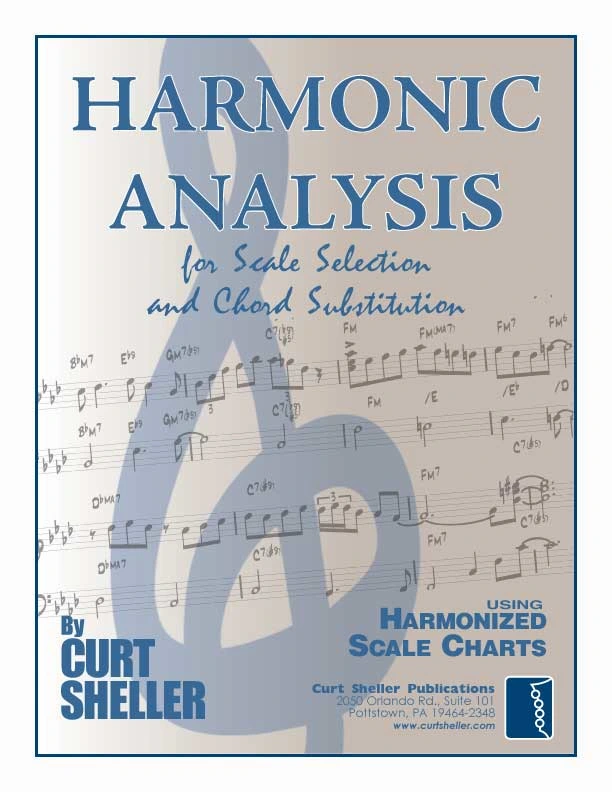
Harmonic Analysis for Scale Selection and Chord Substitution
Published: 2003
Curt Sheller — Harmonic Analysis is the understanding of the functional sequence of chords. It is the process used to analyze the harmonic structure of a progression, song or composition. This analysis is then used to make scale selections for improvisation and chord substitution.
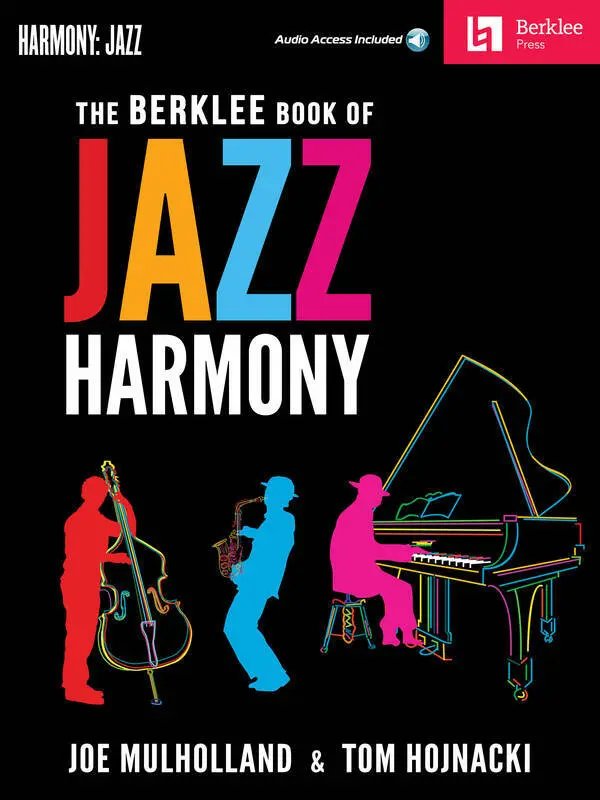
The Berklee Book of Jazz Harmony
Published: 2003
Learn jazz harmony, as taught at Berklee College of Music. This text provides a strong foundation in harmonic principles, supporting further study in jazz composition, arranging, and improvisation. It covers basic chord types and their tensions, with practical demonstrations of how they are used in characteristic jazz contexts and an accompanying recording that lets you hear how they can be applied. The price of this book includes access to audio tracks online, for download or streaming, using the unique code inside the book. The audio features PLAYBACK+, a multi-functional audio player that allows you to slow down audio without changing pitch, set loop points, change keys, and pan left or right – available exclusively from Hal Leonard.
You can't go wrong with owning any of these books in your music library. I have all of these, except for the Berklee book and naturally I have mine.
— Curt


End of Lesson - Thanks, Hope You Enjoyed It!
Related Lessons, Videos, Lesson Series, Songs, Books & Reference Charts, Resources & Assets, Workshops are below.