
Published:
2003-01-01
Updated:
2023-11-08
Learning Ukulele with Curt
Reading Music on Ukulele - Primer
In the realm of music, there are certain aspects that students and players often tend to avoid. These include skills such as learning to read music and familiarizing themselves with the notes on their instrument. While these tasks may seem challenging, particularly on the fretted string instruments, they are comparatively easier on the ukulele. With the appropriate guidance and a well-defined plan, mastering these skills can be a smooth and achievable process.
Main Category: Reading Main Instrument: Ukulele

6 August 2026
In the realm of music, there are certain aspects that students and players often tend to avoid. These include skills such as learning to read music and familiarizing themselves with the notes on their instrument. While these tasks may seem challenging, particularly on the fretted string instruments, they are comparatively easier on the ukulele. With the appropriate guidance and a well-defined plan, mastering these skills can be a smooth and achievable process.
Reading Music on `Ukulele Series - Reading in Open Position, Introduction
There are a few things in music that students and players avoid. These are things like learning to read and knowing the notes of their own instrument. It is hard on guitar - but not so hard on ukulele. With the right guidance and plan of attack. IT IS EASY.
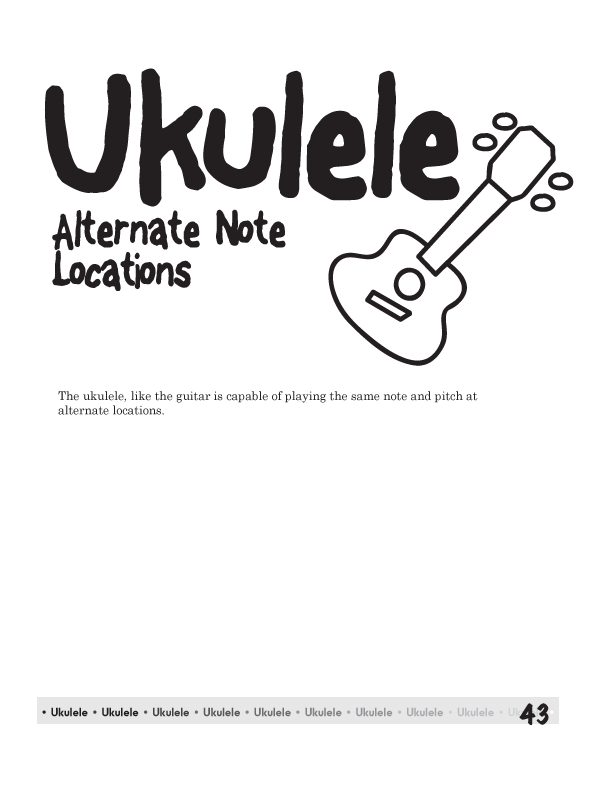
Reading Music on Ukulele Series - Reading in Open Position, Alternate Note Locations
One of the reasons it is hard to read music on the guitar and the ukulele is, alternate note locations. In the open position there is one alternate note location. The open E, string two can also be played on string three, fret (3). If there is no overwhelming musical reason to play one location vs. the other. Then play the one that is easier to play. Use your ear as the final judge as to which one you prefer.
Reading Music on Ukulele Series - Reading in Open Position, What About String Four?
"C Tuning, Low G", extends the melodic range to G below middle C. This expanded range allows for a wider selection when selecting songs to play. The G, A and B are the same names as a high string four but sounding one octave lower.
Reading Music on Ukulele Series - Reading in Open Position, Songs
The following songs can be played in open position using the natural notes covered in the previous lessons of this primer. These songs do not use any signatures, no time or key signature is shown. All songs are played with a quarter note taking one beat. Signatures - both Time Signatures and Key Signatures are covered in book 1 of Ukulele - Reading Music. Playing the rhythms correctly insures that you are playing in the proper time signature.
Reading Music on Ukulele Series - Reading in Open Position, Rhythm
The Ukulele - Reading Music Series uses the "Modular Phonetic Rhythm System" by Chuck Anderson for learning rhythm. ( from Chuck Anderson's Modular Phonetic Rhythm - The Foundation book ) Modular Phonetic Rhythm is based on 23 fundamental rhythmic syllables. These rhythmic syllables vary in length from 1 note to 6 notes and from 1 beat to 2 beats. The system is divided into 4 levels based on the subdivision of the beat. Level I does not subdivide the beat. This is the level in which all notes are struck only on the downbeat. Level II divides the beat into 2 parts. Level III divides the beat into 3 parts. Level IV divides the beat into 4 parts. The levels do not express progressive difficulty, just progressive subdivisions of the beat.
Series Info
Reading
Ukulele
347 visits
Reading Music on Ukulele Series - Reading in Open Position, Alternate Note Locations
One of the reasons it is hard to read music on the guitar and the ukulele is, alternate note locations. In the open position there is one alternate note location. The open E, string two can also be played on string three, fret (3). If there is no overwhelming musical reason to play one location vs. the other. Then play the one that is easier to play. Use your ear as the final judge as to which one you prefer.
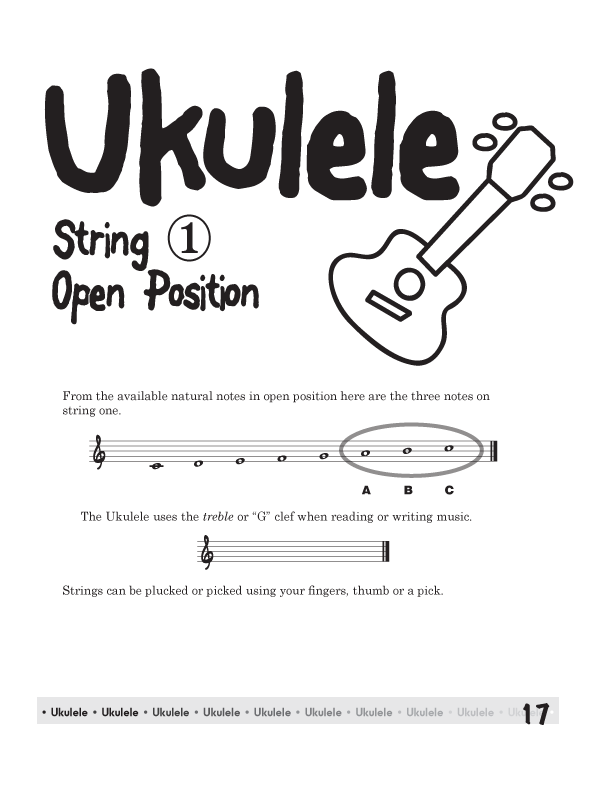
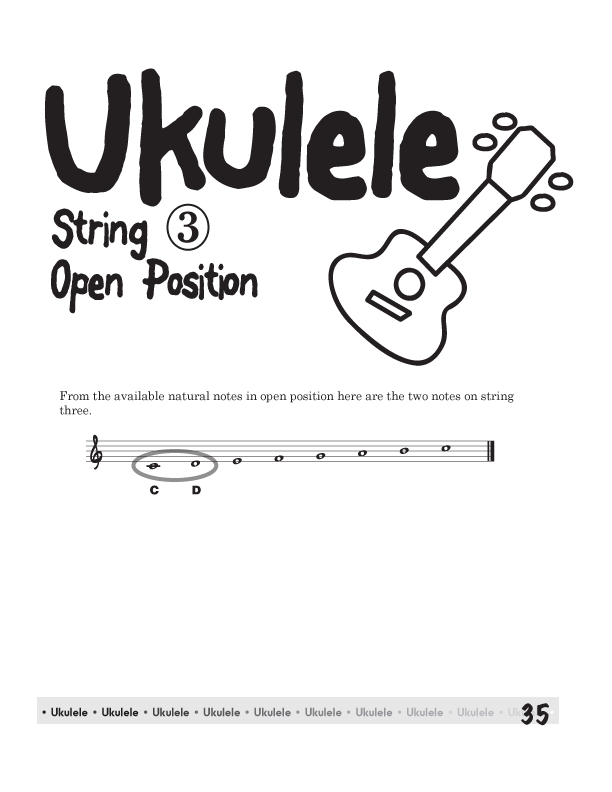
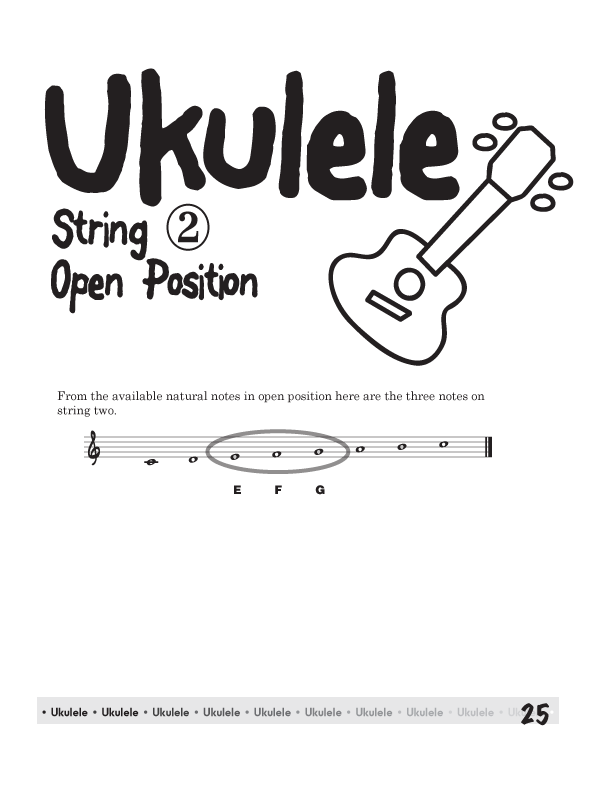
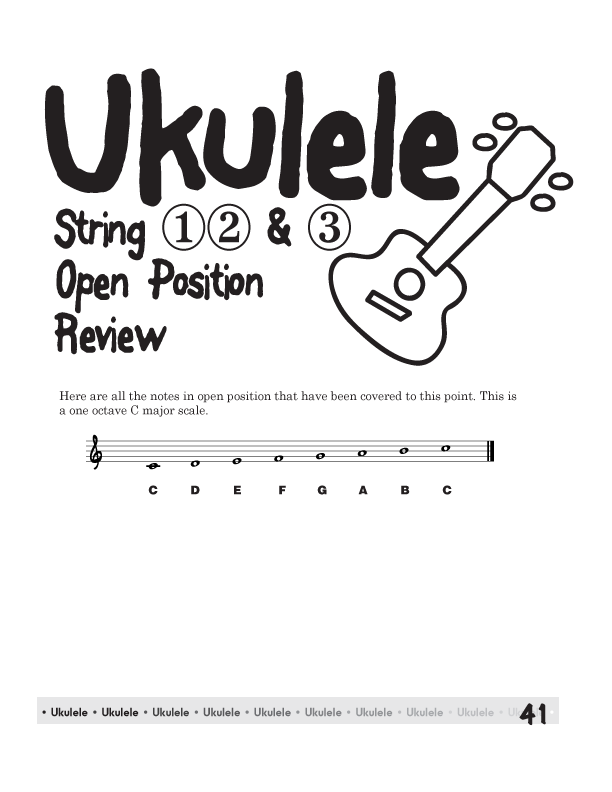



Reading Music on `Ukulele Series - Reading in Open Position
This series of lessons will allow you finally, to check that Reading item off your music To Do list. Learning to read standard music notation opens a world of music to you. Music notation is the Lingua franca of amateur and professional musicians alike.
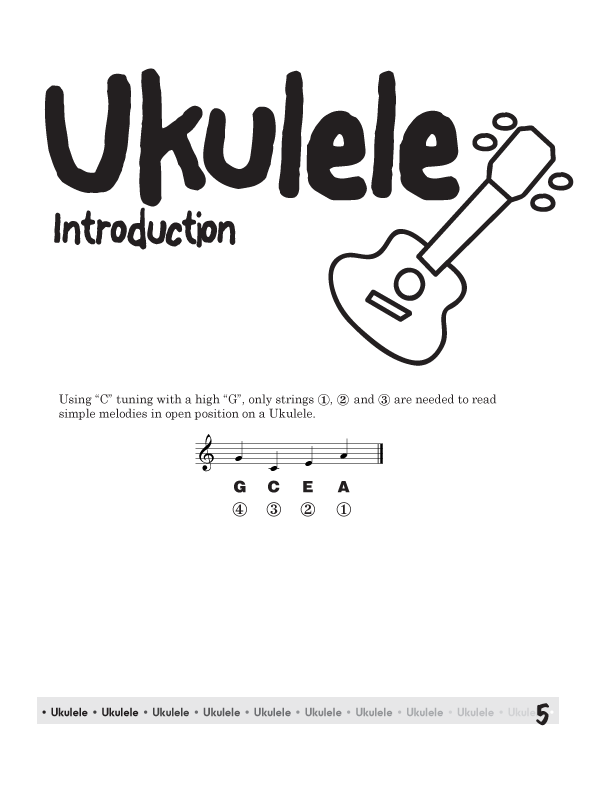
Reading Music on `Ukulele Series - Reading in Open Position, Introduction
There are a few things in music that students and players avoid. These are things like learning to read and knowing the notes of their own instrument. It is hard on guitar - but not so hard on ukulele. With the right guidance and plan of attack. IT IS EASY. It is really quite easy on a uke. Starting with natural notes in in the open position you can finally check off the Reading Music to do item. Learning to read standard music notation is really, really easy.

Rhythm, Avoid at Your Own Peril
The often neglected and taken for granted subject of "Rhythm". Music is Melody, Harmony, and "Rhythm." We are drawn, initially to music by melody at a very early age, with the instrument of our voice. With ukulele you typically learn chords - the harmony and never really dive into learning rhythm. Unless you're a drummer we take rhythm for granted.